
Social media is defined as the use of digital platforms to build brand awareness, engage customers, and inform marketing decisions with real-time data. The role of social media has shifted far beyond personal networking. Global user identities reached 5.79 billion as of april 2026, representing nearly 70% of the world's population. That scale means your customers are already on these platforms, and the question is whether your brand shows up when they look. Social media now surpasses traditional broadcast TV in monthly reach, making it the most direct communication channel available to business owners and marketers today.
What is the role of social media in brand visibility?
Brand visibility on social media depends on discoverability, not just posting frequency. Social media search engine optimization, known as SOSEO, and answer engine optimization, known as AEO, are now core requirements for brand discoverability in 2026. Consumers search social platforms the same way they search Google, looking for user-generated content, visual proof, and real-time trends before they buy. Brands that treat social media as a search channel, not just a broadcast channel, gain a measurable visibility advantage.
Each major platform serves a different discovery behavior. Facebook drives community-based discovery through groups and shared posts. YouTube functions as the world's second-largest search engine, with users actively seeking how-to and product review content. Instagram and TikTok prioritize visual and short-form video content, where algorithmic reach can extend a single post far beyond your existing follower base. Understanding where your audience searches determines which platform deserves your primary investment.

Platform reach and content dynamics at a glance:
| Platform | Primary content type | Discovery mechanism |
|---|---|---|
| Text, image, video | Groups, shares, paid ads | |
| YouTube | Long-form video | Search, recommendations |
| Image, short video | Explore page, hashtags | |
| TikTok | Short-form video | For You Page algorithm |
Consistent, searchable content builds compounding visibility over time. A single well-optimized post can surface in platform search results weeks after publication. Brands that publish sporadically lose that compounding effect and rely entirely on paid reach to stay visible.
- Post content that answers specific questions your customers ask
- Use platform-native formats (Reels on Instagram, Shorts on YouTube) to maximize algorithmic reach
- Optimize captions and profiles with keywords your audience actually searches
- Repurpose high-performing content across platforms to extend its reach
Pro Tip: Treat your social media profile bio as a landing page headline. It appears in platform search results and should state exactly what you do and who you serve.
How does social media affect customer engagement and loyalty?
Social media is the frontline for customer service, not a secondary support channel. 45% of professionals report success from proactive social interaction, meaning brands that reach out first, respond fast, and engage consistently outperform those that wait for customers to come to them. That number reflects a direct link between engagement behavior and retention outcomes.
Community building on social media produces loyalty that paid advertising cannot replicate. When customers feel part of a brand's community, they advocate for it publicly. That advocacy generates organic reach and social proof, two assets that reduce your customer acquisition cost over time. A social media growth strategy built around community, not just content, creates this compounding loyalty effect.
Real-time feedback is one of the most underused benefits of social media for small and mid-size businesses. Comments, direct messages, and mentions give you unfiltered customer sentiment the moment it forms. Brands that monitor this feedback and respond personally build relationships that feel human, not automated.
Here is how to build engagement that converts to loyalty:
- Respond to every comment and direct message within 24 hours, even if the response is brief.
- Ask questions in your posts to invite dialogue rather than passive scrolling.
- Feature customer content and testimonials to make your audience feel seen.
- Create platform-specific communities, such as Facebook Groups, where customers interact with each other, not just with your brand.
- Use polls and story features to gather preferences before launching new products or promotions.
Pro Tip: Social listening tools that track brand mentions across platforms let you respond to conversations happening about your business even when you are not tagged directly.
How can social media insights shape your marketing strategy?
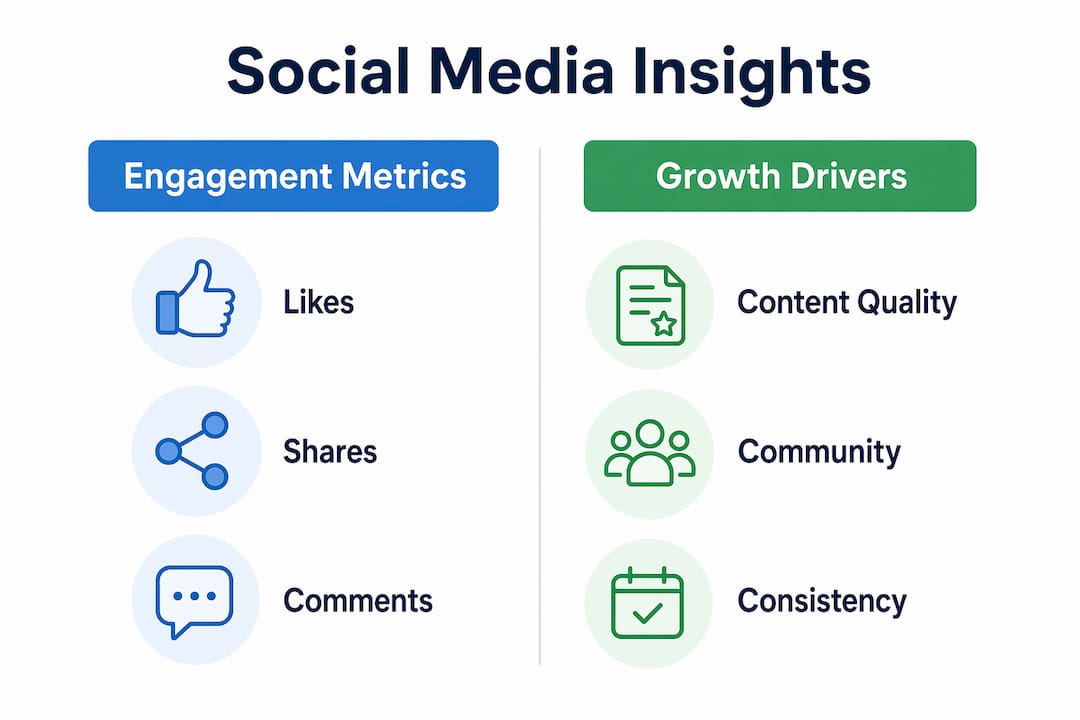
Social media teams function as strategic translators. They convert consumer sentiment, comments, and behavioral data into product development decisions and marketing direction. Consumer feedback gathered through social channels directly influences what brands build, how they price it, and how they communicate its value. This feedback loop is one of the clearest benefits of social media for businesses that pay attention to it.
Social listening, the practice of monitoring brand mentions, competitor activity, and industry conversations in real time, enables proactive crisis management. Brands that catch a negative trend early can address it before it escalates into a reputational problem. Those that only monitor their own posts miss the broader conversation shaping how customers perceive their category.
- Monitor branded keywords and product names daily, not just tagged mentions
- Track competitor sentiment to identify gaps your brand can fill
- Use engagement rate, not follower count, as your primary performance metric
- Segment your audience by behavior and tailor content to each segment's demonstrated interests
- Feed social data into quarterly marketing plans and product roadmaps
Pro Tip: Engagement rate (likes, comments, shares divided by reach) tells you far more about content quality than raw follower numbers. A post reaching 500 engaged people outperforms one reaching 5,000 passive scrollers.
One important nuance: active user identity counts overstate unique individuals because many people hold multiple accounts across platforms. Marketers who build strategy on raw platform reach figures without adjusting for this overlap will overestimate their actual audience size. Accurate planning requires looking at engagement data alongside reach data.
How does social media influence user behavior and mental health?
The impact of social media on society extends beyond marketing metrics. Research links social media use exceeding 3 hours daily in adolescents to higher rates of depressive and anxiety symptoms, partly through disrupted sleep. Marketers who understand this dynamic can make more responsible choices about when and how they reach their audiences.
The psychological mechanism matters more than screen time alone. Social comparison and maladaptive emotion regulation drive negative outcomes more than the number of hours spent on a platform. Feeds that trigger constant comparison, such as idealized lifestyle content, produce different psychological effects than feeds centered on community support or practical information.
"Mental health impact from social media stems more from engagement quality, specifically social comparison and emotional regulation patterns, than from sheer screen time. Brands that create content encouraging connection rather than comparison contribute to healthier platform environments and build stronger audience trust."
For business owners and marketers, this has a direct implication. Messaging that creates unrealistic aspirations or exploits insecurity may generate short-term clicks but erodes long-term brand trust. Content that educates, entertains, or genuinely solves a problem builds an audience that returns. Ethical content choices are also good business decisions.
Practical steps to maximize social media in 2026
Effective social media strategy in 2026 requires platform-specific thinking, not a one-size approach. Each platform has its own culture, algorithm, and audience expectation. A post that performs on LinkedIn will not automatically work on TikTok. The importance of social media marketing for SMBs lies in choosing the right platforms and executing with discipline, not spreading effort across every channel.
- Choose platforms by audience behavior. Identify where your specific customers spend time and concentrate your effort there before expanding.
- Integrate social data into your marketing plan. Review social analytics monthly and use what you find to adjust content themes, posting times, and campaign messaging.
- Balance automation with personalization. Scheduling tools maintain consistency, but automated responses to customer questions damage trust. Reserve automation for publishing, not conversation.
- Measure ROI beyond vanity metrics. Track website traffic from social, lead form completions, and direct sales attributable to social campaigns. Follower growth alone does not pay for your marketing budget.
- Adapt to platform changes quickly. Algorithm updates on Facebook, Instagram, and TikTok shift reach dynamics regularly. Brands that test new formats early gain an advantage before the market catches up.
For small business marketing strategies in 2026, the most effective approach combines consistent organic content with targeted paid amplification on the one or two platforms where your audience is most active.
Key Takeaways
Social media's role in business is defined by its ability to connect brands with billions of active users, generate real-time customer intelligence, and drive measurable growth through consistent, platform-specific engagement.
| Point | Details |
|---|---|
| Social media reach is massive | 5.79 billion user identities globally means your audience is already on these platforms. |
| SOSEO drives brand visibility | Treat social platforms as search engines and optimize content for discoverability. |
| Engagement quality beats quantity | Proactive, personalized responses build loyalty more effectively than high follower counts. |
| Social data informs strategy | Consumer feedback from social channels should feed directly into marketing plans and product decisions. |
| Platform culture requires tailored content | Each major platform has distinct audience behaviors that demand platform-specific content approaches. |
What I've learned about social media that most brands get wrong
Most business owners treat social media as a megaphone. They post announcements, promotions, and product updates, then wonder why engagement is flat. The brands I've seen grow consistently do the opposite. They listen first and broadcast second.
The shift that changes everything is treating your social channels as a customer intelligence system, not a publishing schedule. When you read comments, track mentions, and actually respond to what customers say, you start making better decisions across your entire business, not just your content calendar. I've watched brands catch a product flaw through a single thread of Instagram comments before it became a customer service crisis.
The other mistake I see constantly is chasing platform trends without a clear audience strategy. A business that serves local clients does not need a viral TikTok. It needs consistent, credible content in the places its specific customers already trust. Spreading thin across every platform produces mediocre results everywhere. Concentrating effort on one or two platforms produces real traction.
Social media influence is real, but it is earned through consistency and genuine interaction, not through posting volume. The businesses that win on social media in 2026 are the ones that show up reliably, respond honestly, and use what they learn to get better.
— Tran
How Sourcesnova helps you turn social media into real business growth
Sourcesnova works with local and small-to-mid-size businesses that want social media to produce actual results, not just impressions and follower counts. The team builds clear, platform-specific strategies that connect your brand with the right audience and turn that attention into customers.
From content planning and community management to paid social campaigns and analytics reporting, Sourcesnova handles the execution so you can focus on running your business. No jargon, no bloated retainers, and no vanity reports. If you are ready to make social media work as a genuine growth channel, see what Sourcesnova offers and get a strategy built around your specific business goals.
FAQ
What is the role of social media in marketing?
Social media in marketing serves as a channel for brand visibility, customer engagement, and real-time consumer research. It enables businesses to reach targeted audiences, gather feedback, and adjust campaigns based on live data.
How does social media affect customer retention?
Proactive social engagement directly improves retention. Research shows 45% of professionals report measurable success from consistent, personalized social interaction with customers.
Which social media platform is best for small businesses?
The best platform depends on where your specific customers spend time. Facebook suits community-based businesses, Instagram and TikTok favor visual products, and YouTube works well for businesses that can demonstrate expertise through video.
How does social media influence society?
Social media shapes public opinion, purchasing behavior, and cultural trends at scale. Research links engagement quality, particularly social comparison patterns, to psychological outcomes more strongly than total time spent on platforms.
How do I measure social media ROI?
Track website traffic from social channels, lead form completions, and direct sales attributed to social campaigns. Engagement rate (interactions divided by reach) is a more reliable content quality signal than follower count or raw impressions.