
Most small business owners have spent real time posting on Instagram, only to wonder why their follower count is climbing while their sales aren't. The platform has over two billion monthly active users, yet the gap between posting consistently and generating actual revenue is where most businesses get stuck. Effective instagram marketing for business isn't about posting more. It's about posting strategically, tracking what matters, and building a system that turns profile visitors into paying customers. This guide walks you through exactly how to do that.
Table of Contents
- Key takeaways
- Instagram marketing for business: start with goals
- Setting up your Instagram business profile
- Creating Instagram content that converts
- Instagram Shopping and paid advertising
- Measuring what actually matters
- My honest take on what actually works
- How Sourcesnova helps you execute this faster
- FAQ
Key takeaways
| Point | Details |
|---|---|
| Goals before content | Define specific business outcomes like leads or sales before planning any Instagram content. |
| Profile setup matters | A properly configured Business Account with tracked links is your measurement foundation. |
| Format drives function | Use Reels for discovery, carousels for credibility, and Stories with CTAs for conversions. |
| Shopping needs prep work | Verify your domain and complete your catalog before submitting for Instagram Shopping approval. |
| Track off-app results | Measure website traffic, lead form completions, and revenue using UTM parameters, not just likes. |
Instagram marketing for business: start with goals
The most common mistake small business owners make on Instagram is treating it like a social diary instead of a sales channel. Before you create a single post, you need to define what success looks like in business terms.
"Grow my following" is not a goal. "Generate 30 inbound leads per month from Instagram" is. Strategy should start with clear business goals and a defined audience before any content gets planned. That distinction changes everything from what you post to how you measure it.
Here's how to translate vague Instagram ambitions into concrete objectives:
- Brand awareness: Track profile visits, reach, and impressions from non-followers. Tie these to new website sessions from Instagram.
- Lead generation: Use Stories with link stickers pointing to a landing page. Measure form completions via UTM-tagged URLs.
- Direct sales: Connect Instagram Shopping or bio link tools to purchase tracking in Google Analytics 4.
- Customer retention: Monitor saves and DM volume on educational content aimed at existing buyers.
Once you know your goal, you can identify the audience most likely to help you hit it. Research where your buyers spend time on Instagram, which accounts they follow, and what content they save or share. This shapes your content calendar before you ever open a camera app.
Precise objective-setting with defined success metrics is what separates accounts that grow revenue from accounts that just grow.
Setting up your Instagram business profile
Getting the technical foundation right sounds boring. It is also the step most small businesses skip, and then spend months wondering why their analytics are unreliable.
Follow these steps to set up a profile that works as a measurement system, not just a public page:
- Switch to a Business or Creator Account. Go to Settings, select Account, and tap "Switch to Professional Account." Connect your Facebook Page during this step. Without this connection, Instagram Shopping and some ad features won't be available.
- Optimize your name field. Instagram's search algorithm reads your name field as a keyword. If your business is a nail salon in Austin, use "Austin Nail Salon" in the name field alongside your brand name. This alone increases discoverability.
- Write a bio with a clear call to action. Tell visitors exactly what you offer and what to do next. "Custom skincare blends, shipped in 48 hours. Shop the link below." is better than a brand tagline no one searches for.
- Use a UTM-tagged link in your bio. A link-in-bio manager with unique UTM parameters lets you track exactly how much traffic and revenue Instagram sends to your website. Without this, Google Analytics lumps Instagram visits into "Direct" traffic and you lose visibility.
- Activate Instagram Insights. Once you have a Business Account, Insights gives you reach, impressions, follower demographics, and content performance data at no cost.
- Add a scheduling tool. Scheduling platforms let you batch-create content and publish consistently without being tied to your phone every day. Meta Business Suite, Later, and Buffer all offer small business pricing tiers.
Pro Tip: When setting up UTM parameters for your bio link, use utm_source=instagram, utm_medium=social, and a unique utm_campaign value for each promotion or content series. This gives you clean, attributable data in GA4 from day one.
Creating Instagram content that converts
Content is where most small businesses invest the most time and get the least return. The reason is usually a mismatch between format and purpose. Not every post type does the same job.

Here is how the main Instagram formats map to business outcomes:
| Format | Primary purpose | Best business use |
|---|---|---|
| Reels | Discovery and reach | New audience acquisition, brand visibility |
| Carousels | Education and saves | Building credibility, product comparisons |
| Stories | Real-time engagement | Promotions, CTAs, direct traffic to links |
| Static posts | Brand aesthetic | Social proof, announcements, testimonials |
Mixing content formats creates a balanced strategy where each type strengthens the others. Reels bring in new viewers. Carousels give those viewers a reason to follow and save. Stories convert followers into buyers.
Here are content ideas mapped to specific business goals:
- Education: Short carousel posts teaching customers how to use your product or service. These earn saves, which Instagram's algorithm treats as a strong quality signal.
- Social proof: Repost customer photos, share before-and-after results, or create quote graphics from real reviews.
- Product value: Reels showing your product in use, ideally solving a specific problem. Keep these under 30 seconds with a clear visual payoff.
- Behind the scenes: Stories showing your process build trust and make your brand feel human without requiring high production quality.
On hashtags: stop trying to find the perfect 30. Semantic keyword use in your captions and alt text now outperforms hashtag volume. Write captions that describe what your post is about in natural language. Use three to five targeted hashtags maximum, and fill in the Instagram alt text field with a description that includes your core search terms.
Pro Tip: Batch your content creation by shooting 8 to 10 pieces of content in one session, then scheduling them across two weeks. This approach, which reduces posting burnout and maintains consistency, is one of the highest-leverage changes a small business can make to their Instagram workflow.
You can find a deeper breakdown of content formats for brand visibility that maps well to Instagram's current algorithm behavior.
Instagram Shopping and paid advertising
Organic content builds an audience. Shopping and paid ads turn that audience into revenue at scale.
Setting up Instagram Shopping
Instagram Shopping requires a professional account, a verified domain, a compliant product catalog, and a connected Facebook Page. Approval takes one to two weeks, so submit early. Before you submit, validate your setup completely:
- Confirm your domain is verified in Meta Business Manager.
- Check that your product catalog has complete titles, descriptions, and pricing with no missing fields.
- Review Meta's commerce policies to confirm your product category is eligible.
- Connect your catalog to your Instagram Business Account under Settings > Business > Shopping.
Once approved, tag products in feed posts, Reels, and Stories. Use keyword-rich product titles and descriptions because Instagram's internal search indexes this copy.
Running effective Instagram ads
For small businesses, UTM parameters in ad links are non-negotiable. Without them, paid traffic from Instagram often appears as "Direct" or "Unassigned" in GA4, making it impossible to calculate your actual return on ad spend.
Start with these ad formats that deliver measurable results on modest budgets:
- Traffic campaigns pointing to a landing page with a single, clear offer. Tag every link with UTM parameters.
- Retargeting campaigns targeting users who visited your website but didn't purchase. These typically show the lowest cost per conversion.
- Shopping ads using your catalog to display products to users browsing similar items. These work especially well once your catalog is optimized with search-relevant copy.
Keep your initial daily budget at $10 to $15 per ad set, run for seven days, and evaluate click-through rate and cost per result before scaling. You can find more detail on paid tactics in this SMB advertising guide that covers budget allocation frameworks for small business campaigns.
Measuring what actually matters
Most small business owners track the wrong numbers. Follower count and likes feel meaningful but they rarely correlate with revenue. True Instagram ROI lives off the app, in website traffic, lead form completions, and direct purchases.
The metrics worth tracking are:
- Saves: A save means a user found your content valuable enough to revisit. High save rates signal content quality better than likes do.
- Shares: When followers share your post to their Stories or DM it to contacts, your reach compounds without additional ad spend.
- Profile conversion rate: Divide profile visits by new followers. A low rate means your bio or feed isn't convincing visitors to stay.
- Link-in-bio clicks: Track this in your link manager and GA4. It tells you how well your content motivates action.
- Off-app revenue: Use your UTM-tagged links to see exactly which Instagram posts and ads drove purchases in GA4.
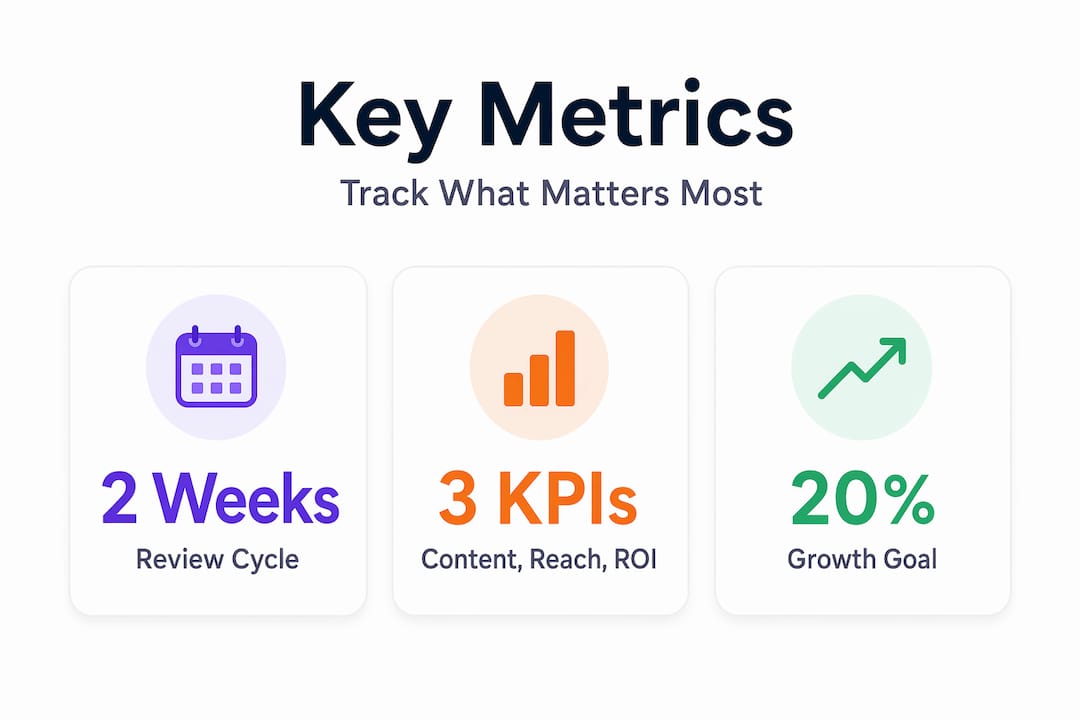
Review your analytics every two weeks, not daily. Daily fluctuations create anxiety and bad decisions. Biweekly reviews show actual trends. Identify your top two or three performing content formats by saves and link clicks, then produce more of those. Cut formats that consistently underperform.
Instagram marketing as a portfolio of tactics works best when you align each tactic to a specific funnel stage and measure accordingly.
My honest take on what actually works
What I've seen consistently across small businesses is this: the ones who treat Instagram as a business channel from day one outperform those who treat it as a social hobby they eventually want to monetize. The mindset difference is more significant than any single tactic.
In my experience, the efficiency-first approach almost always beats the "post every day" approach. Posting six Reels a week of mediocre quality will not outperform two high-quality, well-targeted posts that map to a specific business goal. I've watched business owners burn out chasing volume, then abandon the platform entirely. The ones who batch their content, track their results, and adjust based on data are still growing a year later.
The other lesson I keep coming back to: small businesses underestimate the setup phase. Skipping UTM parameters, connecting a catalog before it's complete, or launching ads before the bio link is tracked always costs more time than doing it right the first time.
My advice is to spend two weeks on setup and strategy before you create a single post. Build the tracking infrastructure. Define your goals. Then create content with a specific purpose behind every format you use. The patience required upfront pays off in data you can actually act on.
— Tran
How Sourcesnova helps you execute this faster
Knowing the strategy is one thing. Having the team and tools to execute it without pulling your attention away from running your business is another.
Sourcesnova works with small and mid-sized businesses across retail, beauty, e-commerce, and service industries to build Instagram marketing systems that produce real outcomes, not just engagement reports. Services include content strategy development, ad campaign management with full UTM tracking, Instagram Shopping setup, and analytics reporting tied to revenue metrics.
If you've been posting without clear results, or you want to scale what's already working without hiring an in-house team, Sourcesnova provides the execution layer your business needs. Visit sourcesnova.com to explore how the team can support your Instagram growth goals with a strategy built around your specific business outcomes.
FAQ
What is the first step in Instagram marketing for business?
Define your business goals before creating any content. Clear goals like lead generation or direct sales determine which content formats, metrics, and tools you should prioritize.
How do I measure Instagram ROI for a small business?
Use UTM-tagged links in your bio and ads, then track resulting website traffic, conversions, and revenue in Google Analytics 4. Likes and follower count alone do not indicate business impact.
Do I need a big budget for effective Instagram ads?
No. Starting with $10 to $15 per day per ad set for a seven-day test is enough to evaluate performance. Retargeting campaigns and Shopping ads typically deliver the lowest cost per conversion for small businesses.
What Instagram content drives the most conversions?
Stories with direct link stickers and Shopping tags typically drive the highest conversion rates, while Reels expand reach to new audiences. The combination of both formats covers discovery and conversion in one strategy.
How long does Instagram Shopping approval take?
Instagram Shopping approval takes one to two weeks. Completing your product catalog, verifying your domain, and reviewing Meta's commerce policies before submission reduces the risk of delays.