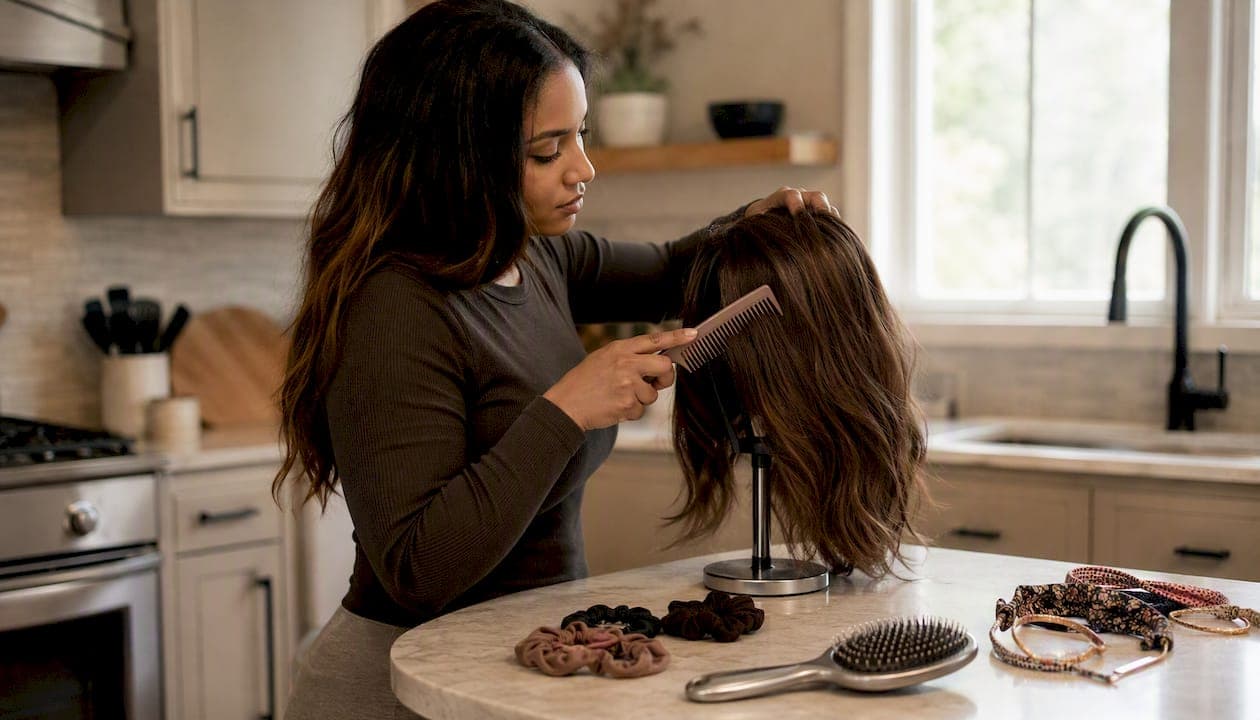
Yes, you can style synthetic wigs — but the answer depends entirely on what type of fiber you are working with. Heat-friendly synthetic wigs accept low-temperature tools and the "heat-and-cool" method. Standard synthetic wigs do not tolerate heat at all and require non-heat techniques only. Ignoring that distinction is the single most common cause of permanent, irreversible damage.
Before you touch a curling iron or reach for a styling spray, follow these three rules without exception:
- Check the fiber label. Look for "heat-friendly" or "heat-resistant" wording and a stated temperature limit before applying any heat tool.
- Never use human-hair products. Regular gels, alcohol-heavy hairsprays, and heavy serums build up on synthetic fibers, accelerate wear, and shorten the wig's lifespan.
- Always test heat on a hidden section first. A two-second pass at the lowest setting on a strand near the nape tells you whether the fiber can handle more.
The most common irreversible mistake: applying a curling iron at human-hair temperatures (350°F and above) to a standard synthetic wig. The fiber melts or frizzes permanently within seconds, and no product or technique can reverse it.
Table of Contents
- Can you style synthetic wigs, and how do you know which type you have?
- How to prepare your wig before styling
- Which tools and products are safe for synthetic wigs?
- Step-by-step styling methods: heat-free, heat, and trimming
- Accessories and quick, heat-free ways to change a look
- How to maintain and store your wig to make styles last
- When should you see a professional wig stylist?
- Safety testing checklist before you style
- Key Takeaways
- The case for starting cautious and building from there
- Useful sources and further reading
Can you style synthetic wigs, and how do you know which type you have?
The label inside the cap is your first stop. Manufacturers print fiber type and, for heat-friendly wigs, a maximum temperature rating directly on the tag. Look for phrases like "heat-friendly fiber," "heat-resistant," or a specific degree limit such as "up to 320°F." If the tag says nothing about heat, treat the wig as standard and skip all heat tools.
When the label is missing or faded, physical clues help narrow it down:
- Sheen and texture: Standard synthetic fibers tend to have a uniform, slightly plastic sheen. Heat-friendly fibers typically feel softer and more matte, closer to processed human hair.
- Pre-styled memory: Standard wigs spring back to their factory shape almost immediately after you reshape them by hand. Heat-friendly fibers hold a new position longer when warmed.
- Fiber stiffness: Standard synthetics feel stiffer and more resistant to bending; heat-friendly fibers have a slight give when gently pulled.
If you still cannot confirm the fiber type, run a home test on a small, hidden strand near the nape. Set your tool to its lowest heat setting (around 250°F), hold it two to three inches from the strand, and apply heat for no more than two seconds. Let the strand cool completely, then inspect it. No shine, no odor, no melting means the fiber may tolerate slightly more heat. Any sign of gloss, stiffness, or a faint burning smell means stop immediately.
Pro Tip: Never test on a visible section. The nape or the underside of a weft gives you the same fiber result without risking a noticeable spot if something goes wrong.
How to prepare your wig before styling
Styling on a dry wig is non-negotiable. Wet synthetic fibers stretch under tension, and brushing or applying heat while the wig is damp can distort curl patterns permanently. Let the wig air-dry completely on a wig stand before you begin.
Washing steps:
- Fill a basin with lukewarm water and add a small amount of wig-safe shampoo or a gentle clarifying formula.
- Submerge the wig and swish it gently. Do not rub, scrub, or wring.
- Rinse thoroughly under cool running water until the water runs clear.
- Press the wig gently between two clean towels to absorb excess water. Never twist.
- Place it on a wig stand and allow it to air-dry fully before any styling attempt.
One practical advantage of synthetic wigs: many return to their preset style once dry, with little or no restyling needed. That built-in fiber memory means washing is often a reset, not a starting-over.
Detangling and mounting:
- Use a wide-tooth comb or a stainless-steel wig brush designed for synthetic fibers.
- Always work from the ends upward toward the roots, never root-to-tip.
- For curly or wavy styles, finger-detangle only. A brush on dry curls breaks the curl pattern.
- Mount the wig on a canvas or Styrofoam block head secured with T-pins. A block head gives you 360-degree visibility, keeps the wig stable during pin-and-cool work, and prevents the cap from shifting while you style.
Which tools and products are safe for synthetic wigs?
The right kit is short. You do not need much, but what you use matters.
Safe tools:
- Wide-tooth comb and stainless-steel wig brush
- Foam rollers and velcro rollers (for non-heat curl setting)
- Wig-safe clips and T-pins
- Handheld clothes steamer (held several inches away from the fiber)
- Low-temperature curling iron or flat iron (heat-friendly wigs only, within the stated limit)
Safe products:
- Wig-specific detangling sprays with silicone base
- Synthetic-safe holding sprays (check the label for "synthetic" or "wig-safe" wording)
- Leave-in conditioners formulated for synthetic fibers
What to avoid:
- Human-hair gels, mousses, and waxes
- Alcohol-heavy hairsprays (alcohol dries and degrades synthetic fibers)
- Heavy serums and oils designed for natural hair
Why the avoid-list matters: Product buildup from human-hair formulas does not wash out easily from synthetic fibers. It coats the strands, dulls the finish, and forces more frequent washing, which shortens the wig's usable life. Reading the label before you buy takes thirty seconds and saves the wig.
For an on-the-go kit, a small pouch with a travel-size wig detangler, a wide-tooth comb, and two or three wig-safe clips covers most mid-day touch-ups without adding bulk.
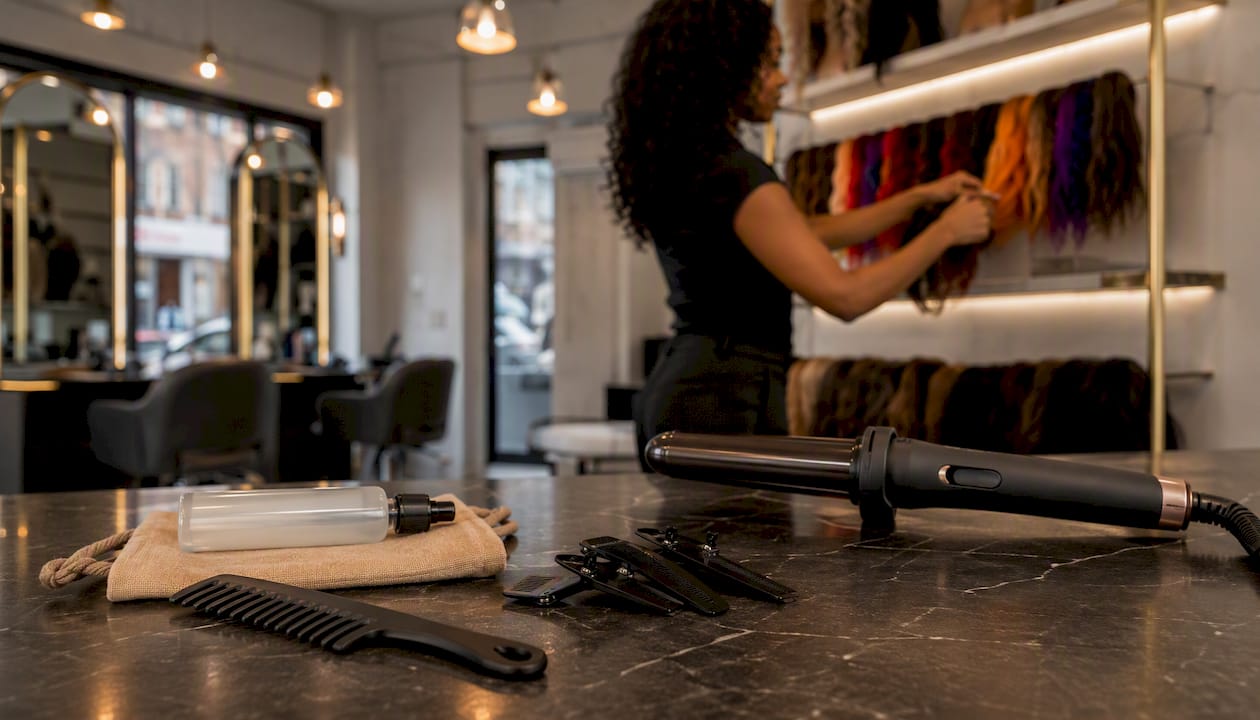
Step-by-step styling methods: heat-free, heat, and trimming
Non-heat methods
These work on any synthetic wig, regardless of fiber type.
- Foam rollers or pin curls: Dampen the wig lightly with water, set sections on rollers or pin into flat curls, and allow to dry completely before releasing.
- Braids and twists: Braid or twist sections while the wig is slightly damp, let dry fully, then release for waves.
- Steam reshaping: A handheld steamer held several inches from the fiber reshapes curls and smooths frizz with less scorching risk than direct-contact irons. Move the steamer continuously; never hold it in one spot.
- Finger styling and accessories: Redirect sections by hand and secure with clips or pins for quick shape changes.
Heat methods for heat-friendly fibers
The heat-and-cool method is the core technique. Heat softens the fiber into a new shape; cooling locks it there. Releasing the curl before it cools fully means the style will not hold.
- Section the wig into manageable parts and clip away sections you are not working on.
- Set your tool within the safe range (see the temperature table below).
- Wrap or clamp a section, hold for three to five seconds, then release.
- Immediately clip the curl against the cap or hold it in shape with your fingers.
- Let the section cool completely before releasing the clip. This step is what sets the style.
- Repeat section by section, working from the nape upward.
Temperature guidance for heat-friendly synthetic wigs:
| Zone | Temperature | What it means |
|---|---|---|
| Optimal range | 270°F–280°F | Safe for most heat-friendly fibers; start here |
| Maximum limit | 320°F | Upper boundary; do not exceed without confirming fiber rating |
| Danger zone | Above 350°F | Likely to melt or permanently frizz fibers |
Pro Tip: Always start at the lowest setting and increase only if the fiber is not responding. Going low and slow protects the wig far better than starting high and hoping for the best.
Trimming basics
Small trims — softening the ends of bangs, cleaning up a blunt edge — are within reach for a careful beginner using sharp hair shears. Cut dry, take off less than you think you need, and check the result before cutting more. For anything beyond minor end-trimming, a professional stylist with alternative-hair experience is the safer call. Synthetic fibers fray differently from human hair, and an uneven cut on a wig is difficult to correct.
Troubleshooting quick fixes:
- Limp curls: The fiber cooled before you clipped it. Re-heat the section and hold the shape until fully cool.
- Frizz at ends: Likely too much heat or too-fast movement. Drop the temperature and slow your pass.
- Style not holding: Apply a light mist of synthetic-safe holding spray before heat, then use the heat-and-cool method.
Accessories and quick, heat-free ways to change a look
Headbands, scarves, and wig-safe clips change a look in under two minutes without touching the fiber structure. For anyone uncertain about heat or trimming, accessories are the smartest fallback.
- Headbands: A wide fabric or velvet headband pushes the front section back, hides the hairline edge, and creates an instant half-up silhouette.
- Scarves: Wrap a silk or satin scarf around the crown and tie at the nape for a covered style that also protects the fiber from friction.
- Wig-safe clips and barrettes: Gather a side section and clip it back to create a soft asymmetric look or a faux side-part.
- Brooches: Pin a decorative brooch at the temple or crown to anchor a swept-back section without pulling the cap.
- Hat styling: A wide-brim hat or a fitted beanie worn over the wig changes the silhouette entirely and conceals any cap edge.
For a quick low bun, gather the back section, twist loosely, and secure with two or three wig-safe clips. A wrapped headscarf style works well for wigs with visible wefts near the nape, since the scarf covers the construction line naturally. The half-up clip look suits most wig lengths and takes about sixty seconds.
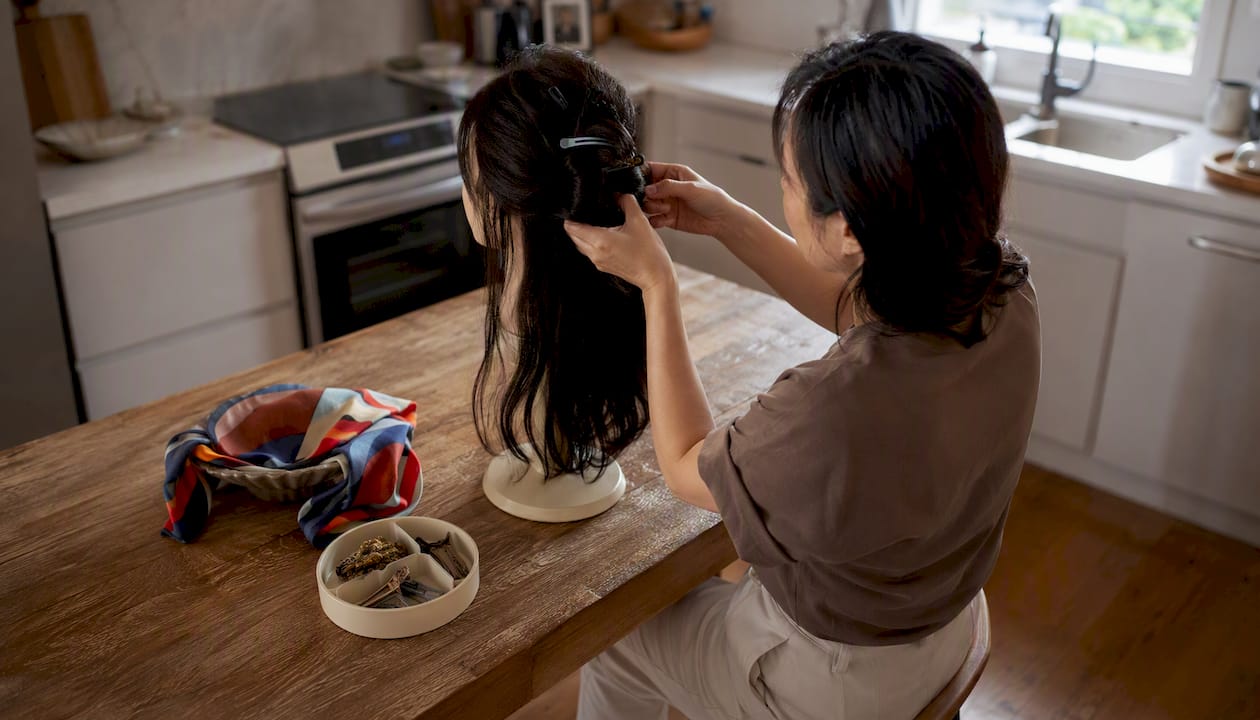
How to maintain and store your wig to make styles last
Washing frequency depends on how often you wear the wig. Light daily wear typically calls for a wash every ten to fourteen days; less frequent use can stretch that to once a month. Washing too often accelerates fiber wear; washing too rarely lets product buildup degrade the fiber from the inside out.
Storage:
- Keep the wig on a wig stand when not in use. A stand preserves the cap shape and lets air circulate through the fibers.
- If a stand is not available, place the wig loosely inside a satin bag or on a satin pillow. Satin reduces friction and static.
- Keep the wig away from direct sunlight, heat vents, radiators, and car dashboards. Sustained ambient heat alters preset styles even without a styling tool.
Daily care:
- Finger-style gently each morning rather than brushing aggressively.
- Spot-spritz with a synthetic-safe detangling spray to refresh the fiber and reduce static.
- Brush only when needed, always from ends to roots, and skip the brush entirely on curly or wavy styles.
Storage rule to remember: A wig left near a heat source, even indirectly, can lose its preset shape over time. The same fiber memory that makes synthetics low-maintenance also makes them sensitive to sustained warmth from the environment, not just from tools.
When should you see a professional wig stylist?
Some situations call for a specialist, and recognizing them early saves the wig.
Go to a professional when you notice:
- Heat damage across multiple sections (melted or permanently frizzy fibers)
- Frayed wefts or cap damage that affects fit or coverage
- You want a precision cut, layering, or a significant length change
- The wig has a lace front that needs ventilating or repositioning
- The wig has high monetary or sentimental value and you are not confident in the technique
An experienced wig stylist who works with alternative hair can reshape fibers, match layers to your face shape, and repair minor cap issues. Finding one is straightforward: search for salons that list "alternative hair," "medical wigs," or "wig styling" as a service, and ask directly whether the stylist has worked with synthetic fibers specifically.
When you book an appointment, bring the wig's original tag or label, photos of the look you want, and your cap size. Cost varies by service and location; a basic trim or reshape typically runs less than a full restyle or lace repair.
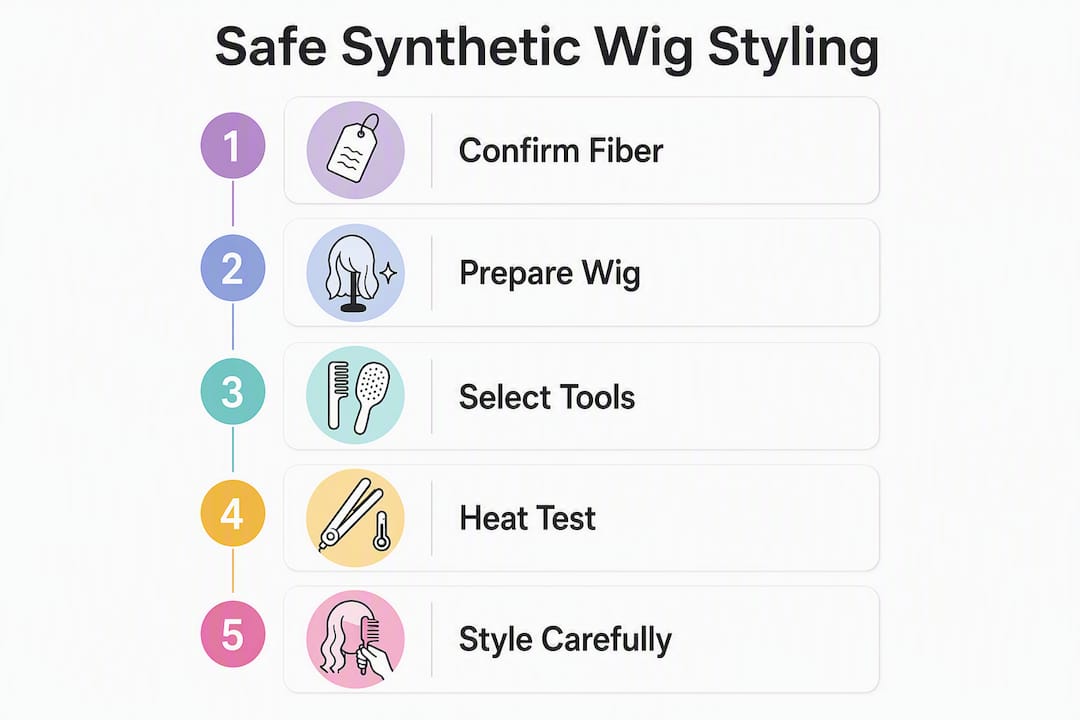
Safety testing checklist before you style
Run through this checklist before applying heat or any new product to a wig you have not styled before.
Pro Tip: Treat every new wig as an unknown until you have confirmed the fiber type from the label and completed a test patch. Even wigs labeled "heat-friendly" vary by brand and batch.
Test-patch procedure:
- Locate a hidden strand near the nape or under a weft.
- Set your heat tool to its lowest setting (around 250°F).
- Apply heat for two to three seconds, holding the tool two to three inches from the fiber.
- Release and let the strand cool completely.
- Inspect for shine, stiffness, melting, or any burning odor. If any appear, stop and use non-heat methods only.
Product rules:
- Never apply human-hair styling products to synthetic fibers.
- Check every product label for "synthetic-safe" or "wig-specific" wording before use.
- When in doubt, a plain water mist is always safe for light refreshing.
Common misconceptions corrected:
- "Pre-styled means I can't change it." Not true for heat-friendly fibers. The preset style is a starting point, not a permanent lock. With the heat-and-cool method, heat-friendly wigs accept new shapes reliably.
- "More heat = better hold." The opposite is true for synthetics. Higher temperatures damage the fiber and produce frizz, not a stronger set. The optimal range of 270°F–280°F holds styles more effectively than pushing toward 320°F.
- "Any hairspray works." Alcohol-based sprays designed for human hair coat synthetic fibers with residue that does not wash out cleanly, dulling the finish and shortening the wig's life.
Key Takeaways
Synthetic wigs can be styled safely when you match the method to the fiber type, stay within temperature limits, and use only synthetic-safe products.
| Point | Details |
|---|---|
| Confirm fiber type first | Check the cap label for "heat-friendly" wording before applying any heat tool. |
| Use the heat-and-cool method | Heat the section, shape it, clip it, and let it cool fully before releasing to lock the style. |
| Stay within 270°F–320°F | Optimal heat is 270°F–280°F; never exceed 320°F; above 350°F melts synthetic fibers. |
| Use only synthetic-safe products | Human-hair gels and alcohol sprays build up on fibers and shorten the wig's lifespan. |
| Accessories are a reliable fallback | Headbands, scarves, and wig-safe clips change a look without any risk to the fiber. |
The case for starting cautious and building from there
The most common mistake with synthetic wig styling is not ignorance of the rules — it is impatience with them. Wig wearers who skip the test patch, reach for a human-hair product because it is within arm's reach, or push the heat setting higher because the curl is not forming fast enough are the ones who end up with a wig they cannot wear. The rules in this guide are not overcautious. They reflect what actually happens to synthetic fibers under the wrong conditions.
The better approach is to start with accessories and non-heat methods, confirm the fiber type before any heat attempt, and treat the first heat session as a test rather than a full restyle. Wigs styled with that mindset last longer, look better, and give you more options over time, not fewer.
Sourcesnova publishes guides like this one to help wig wearers make confident, informed decisions. Follow the step-by-step checklist in this article before attempting any advanced technique, and consult a professional stylist with alternative-hair experience when the work exceeds what a beginner should take on alone.
Useful sources and further reading
The following sources informed this guide and offer additional detail on heat limits, wig care, and professional styling techniques:
- How to Style a Synthetic Wig — Breastcancer.org: Medical-context wig care reference covering washing cadence and fiber maintenance.
- Sourcesnova: Publisher resource for additional guides and service inquiries.