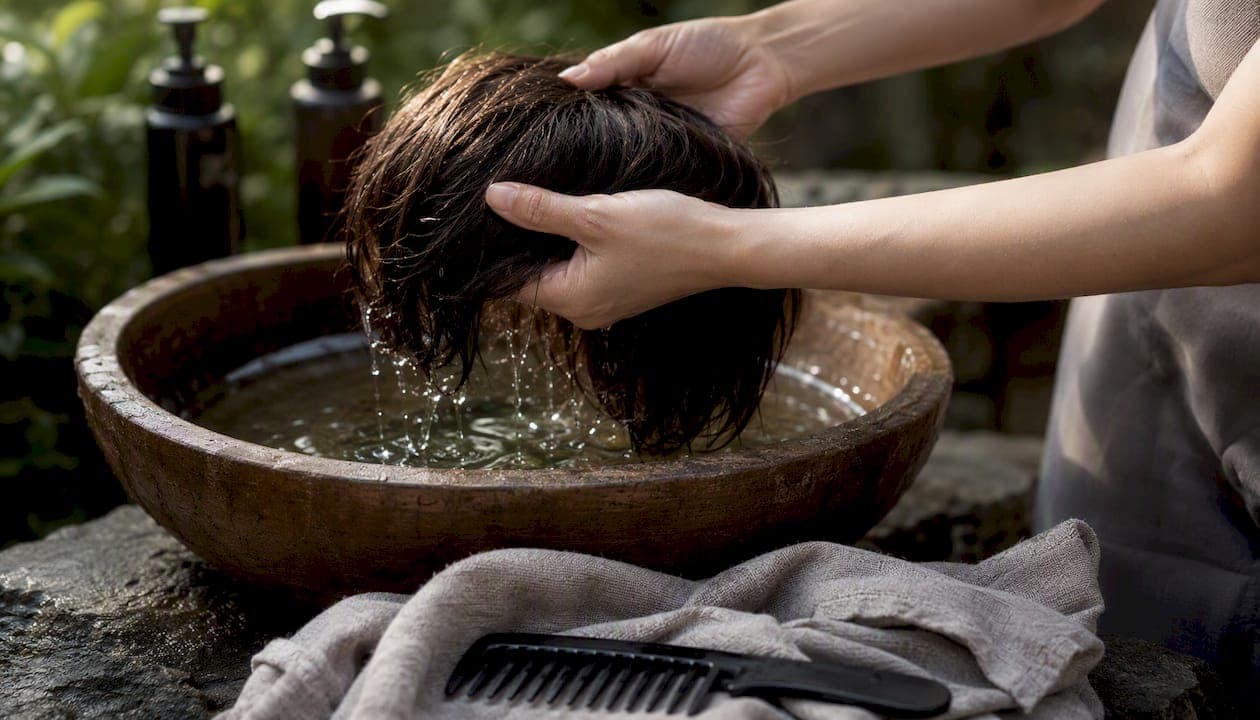
Shampooing a synthetic wig correctly means cool water, a small amount of wig-specific shampoo, a gentle swish, and air-drying on a stand — no heat, no scrubbing. For a human-hair wig, use lukewarm water, a sulfate-free shampoo, conditioner, and low heat only when the cap allows it. Both processes take roughly 20 to 30 minutes of active time, with drying adding several hours.
- Synthetic wigs: cool or cold water only; wig shampoo (not regular household shampoo); gentle swish for 30–60 seconds; air-dry away from direct sunlight or heat sources
- Human-hair wigs: lukewarm water; sulfate-free shampoo; conditioner on lengths; blot-dry and air-dry or low-heat blow-dry
- Wash frequency: professionals recommend every 8–10 wears for regular users; daily wearers should wash synthetic pieces at least once a month
- Time per wash: 5–10 minutes of prep, 10–15 minutes of active washing, 2–8 hours of drying
- Never use: regular dish soap, hot water on synthetic fibers, or household fabric softener
For lace-front or full-lace wigs, support the cap with one hand throughout the entire wash. Pulling at the lace while the wig is wet is the fastest way to loosen knots and shorten the piece's lifespan.
Pro Tip: Set a phone reminder tied to your wear count. After 8–10 wears, wash. That habit alone prevents most product buildup and fiber dullness.
Key Takeaways
The most reliable wig care routine comes down to matching your water temperature, shampoo type, and drying method to your specific fiber — every other variable follows from that.
| Point | Details |
|---|---|
| Match water to fiber type | Cool or cold water for synthetic wigs; lukewarm water for human-hair wigs — always. |
| Use the right shampoo | Wig-specific shampoo for synthetic; sulfate-free shampoo for human hair; baby shampoo as a last resort only for human hair. |
| Detangle before washing | Always detangle dry with a wide-tooth comb before any water touches the wig. |
| Blot and air-dry on a stand | Press with a microfiber towel, never wring; place on a wig stand to hold shape during drying. |
| Seek professional help when needed | Melted fibers, severe base matting, or persistent shedding at the hairline call for a professional wig repair service. |
What makes these steps worth trusting
The steps in this guide follow the same principles recommended by the Cleveland Clinic, professional wig studios, and leading wig-care manufacturers: match the method to the fiber, use purpose-built products, and let the wig dry without shortcuts. Those three rules account for the vast majority of wig care failures when they are ignored.
If you are sourcing wig products for a U.S. retail or wholesale operation, or need guidance on product compliance and market entry, Sourcesnova's resources cover both the consumer care side and the business side of the wig category. The synthetic wig styling guide is a practical starting point for understanding heat ratings and fiber specifications. For broader product sourcing and North American market entry support, Sourcesnova works directly with manufacturers and brands navigating the U.S. market.
Table of Contents
- What products do you need to shampoo a wig safely?
- How should you prep a wig before washing it?
- How do you shampoo a synthetic wig step by step?
- How do you shampoo a human-hair wig differently?
- How do you dry and style a wig after washing?
- What should you do when your wig has tangles, dullness, or buildup?
- Sources
What products do you need to shampoo a wig safely?
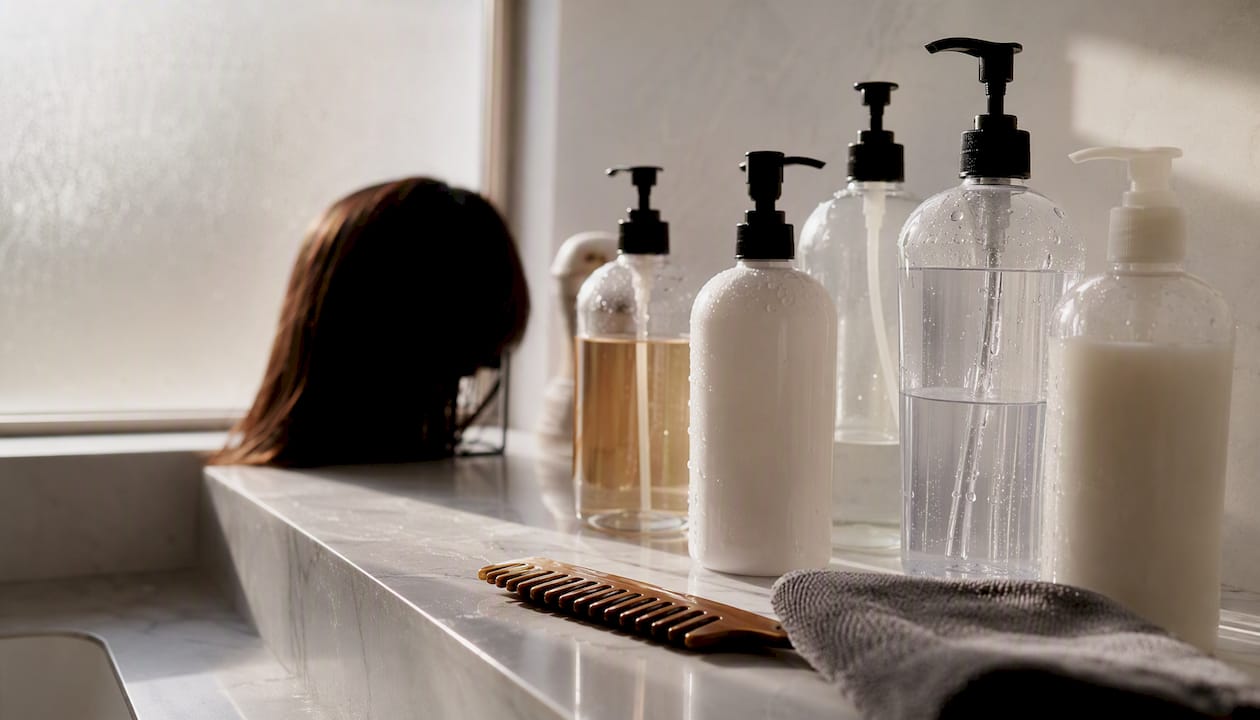
Gathering the right supplies before you start prevents the most common damage. The wrong shampoo or water temperature can strip the protective coating from synthetic fibers in a single wash.
- Wig shampoo (synthetic formula): designed to clean without removing the fiber's protective finish
- Sulfate-free shampoo: for human-hair wigs; sulfates dry out the hair shaft and accelerate shedding at the cap
- Wig conditioner or detangler spray: restores softness and reduces post-wash tangling
- Wide-tooth comb: the only safe comb for detangling before and after washing
- Wig stand: holds the piece in its natural shape while drying
- Microfiber towel: absorbs water without the friction that causes frizz and breakage
Regular household shampoos and soaking techniques can damage wigs by stripping the coatings that give synthetic fibers their movement and sheen. Baby shampoo is an acceptable last-resort substitute for human-hair wigs only — it is mild enough to clean without significant stripping. For synthetic wigs, there is no safe household substitute; use a wig-specific formula.
| Product category | When to use | Acceptable substitute | Why it matters |
|---|---|---|---|
| Wig shampoo (synthetic) | Every wash for synthetic wigs | None | Preserves fiber coating and sheen |
| Sulfate-free shampoo | Every wash for human-hair wigs | Baby shampoo (mild, last resort) | Prevents shaft dryness and cap shedding |
| Wig conditioner | After every wash | Leave-in detangler spray | Restores softness; reduces post-wash tangles |
| Wide-tooth comb | Before and after washing | Fingers only (gentle) | Prevents breakage during detangling |
| Microfiber towel | Blotting after rinse | Soft cotton T-shirt | Low friction; reduces frizz |
Pro Tip: Buy travel-sized or salon-sample sizes of wig shampoo and conditioner for your first few washes. You will use far less product than you expect, and sampling a small size first prevents wasting a full bottle on a formula that doesn't suit your fiber type.
How should you prep a wig before washing it?
Prep takes 5–10 minutes and prevents most of the damage that happens during washing. Skipping it is the main reason wigs come out of the basin more tangled than they went in.
- Detangle the wig while it is dry, using a wide-tooth comb. Start at the ends and work upward toward the base, holding the strand above where you are combing to avoid pulling at the cap. For synthetic wigs, always detangle dry — wet synthetic fibers are more fragile and prone to stretching.
- Remove all clips, beads, and hair accessories before washing.
- If the wig has adhesive residue at the hairline, loosen it first with a dedicated adhesive remover or isopropyl alcohol on a cotton pad. Let it dissolve fully before wetting the cap.
- Test for colorfastness on a hidden section: dampen a small area and blot with a white cloth. If color transfers, wash gently and avoid prolonged soaking.
For lace-front and full-lace wigs, place the piece on a wig block or stable stand before washing rather than holding it in one hand. Washing a human-hair wig on a block preserves the cap shape and prevents hair from being pushed through the cap during handling. The same principle applies to full-lace synthetic pieces.
Pro Tip: Pinning the wig to a block for rinsing gives you two free hands and keeps the cap from distorting underwater pressure. Holding it in one hand while rinsing with the other is workable for short wigs but risky for longer, heavier pieces.
How do you shampoo a synthetic wig step by step?
Cool or cold water throughout is the single most important rule for synthetic wigs. Heat, even warm tap water, can relax the fiber's set curl or wave pattern permanently.
- Fill a basin with cold water. Add one tablespoon of wig shampoo and mix gently until dissolved.
- Submerge the wig. Hold the cap and lower the wig into the basin. Gently swish for 30–60 seconds. Do not scrub, rub, or wring.
- Rinse under cool running water. Hold the wig with the hair flowing downward and rinse until the water runs completely clear.
- Condition (optional but recommended). Fill the basin with fresh cold water and add a small amount of wig conditioner, or apply a detangler spray directly to the lengths. Let it sit for 1–2 minutes, then rinse.
- Blot with a microfiber towel. Press gently — never twist or wring.
- Place on a wig stand. Position it away from direct sunlight and heat sources. Air-dry fully before styling or storing.
Drying typically takes 2–4 hours for short synthetic wigs and up to 8 hours for longer styles. The Cleveland Clinic recommends air-drying on a stand as the standard method for synthetic pieces.
What to avoid:
- Dish soap, fabric softener, or any high-alkaline cleaner
- Hot water at any stage
- Heat tools unless the manufacturer explicitly labels the wig as heat-friendly
This restores shine and sets the fiber back into its original shape before it dries completely.
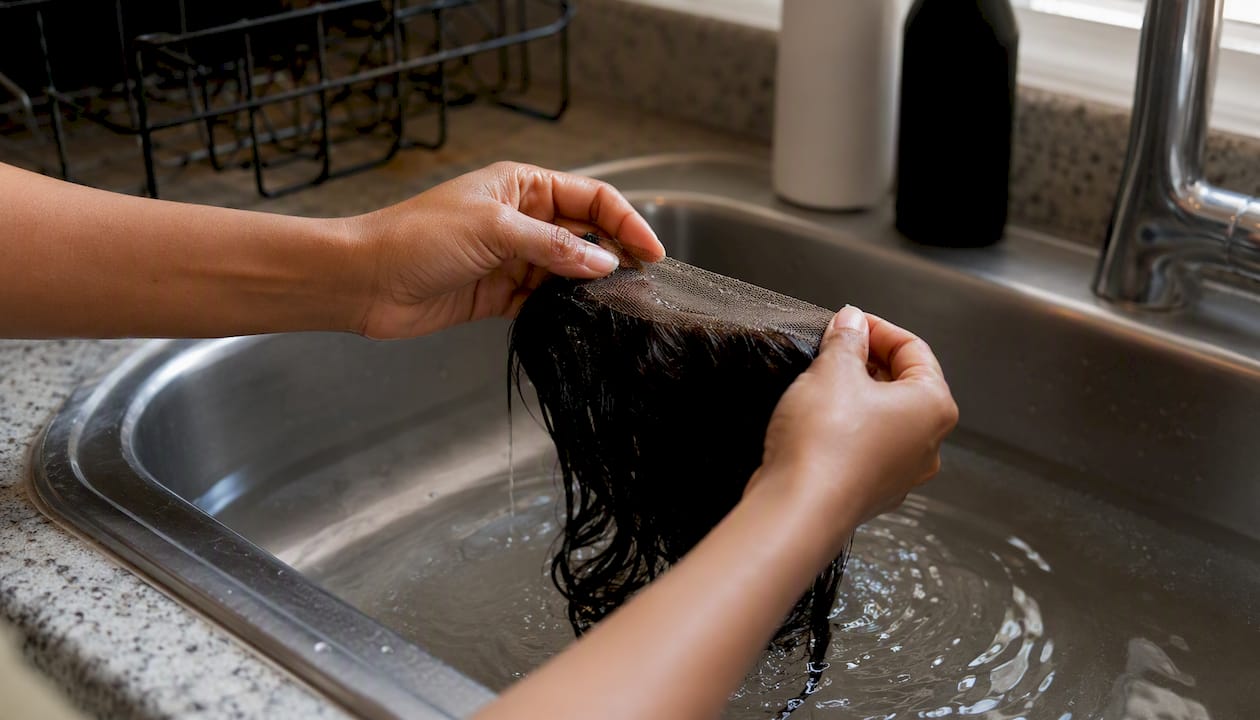
For lace-front synthetic wigs, keep one hand supporting the cap at all times during rinsing. Let water flow down the lengths rather than forcing it upward through the lace.
How do you shampoo a human-hair wig differently?
Human-hair wigs are washed like natural hair but with one key difference: you are not washing hair attached to a scalp. The cap is the structural foundation, and rough handling during washing can loosen knots, distort the base, and cause shedding at the hairline.
Prep and wetting. After detangling on a block, wet the wig by pouring lukewarm water over it from a pitcher or using a gentle sink flow with the hair pointing downward. Avoid holding the wig under a strong shower stream — the pressure pushes hair through the cap.
Shampoo application. Apply a small amount of sulfate-free shampoo to your palms, then smooth it down the lengths in one direction. Do not scrub at the roots or rub sections together. Work the product through gently, then rinse thoroughly with lukewarm water.
Conditioning. Apply conditioner from mid-length to ends. If the cap has adhesive bonding or a lace front, keep conditioner away from the hairline and base — residue weakens adhesives and can loosen knots. Leave in for 2–3 minutes, then rinse.
Post-wash treatment. While the wig is still damp, apply a light leave-in detangler or serum to the lengths. Comb through gently with a wide-tooth comb, starting at the ends.
Drying time for human-hair wigs runs 4–8 hours for air-drying. Low-heat blow-drying on the cool or lowest setting, held at a distance from the cap, can reduce that to 1–2 hours without damaging the fiber. Detangling before washing and reshaping on a stand while damp are the two steps most often skipped — and the two most responsible for post-wash matting.
Pro Tip: Use a diffuser attachment on the lowest heat setting when blow-drying a human-hair wig. It distributes airflow evenly and reduces the risk of concentrating heat on one section of the cap.
How do you dry and style a wig after washing?
Drying method determines how long the wig stays looking fresh between washes.
- Synthetic wigs: air-dry only on a wig stand, away from sunlight and heat vents. Expected dry time: 2–8 hours depending on length and density.
- Human-hair wigs: air-dry on a stand or use a blow-dryer on the lowest heat setting. Air-drying takes 4–8 hours; low-heat blow-drying can cut that to 1–2 hours.
- Removing excess water: blot with a microfiber towel by pressing gently. Never twist, wring, or rub.
- Reshaping: while the wig is still damp, set the part line and reshape the cap by hand. Once dry, these lines are harder to adjust without heat.
For styling after drying, check manufacturer heat guidelines before applying any heat tool to a synthetic wig. Many synthetic fibers are not heat-friendly, and a single pass with a flat iron at the wrong temperature causes permanent damage. Human-hair wigs tolerate low-heat irons and curlers, but the cap itself should never receive direct heat.
Safe styling methods for synthetic wigs include foam rollers, flexi-rods, and finger-shaping while damp. These methods reshape the fiber without heat and hold well once the wig is fully dry.
This prevents tangling during storage and makes the next detangling session much faster.*
What should you do when your wig has tangles, dullness, or buildup?
Most post-wash problems have a straightforward fix if you catch them early.
- Heavy tangles: apply a generous amount of detangler spray and let it sit for 5 minutes before attempting to comb. Start at the ends and work upward in small sections. For severe matting at the base, soak the lengths (not the cap) in a basin of cold water with a capful of wig conditioner for 10–15 minutes before combing.
- Dull or flat fibers: a light application of wig sheen spray restores surface shine on synthetic pieces. For human-hair wigs, a small amount of argan oil or a lightweight serum applied to dry lengths works well.
- Product buildup: run a second gentle wash with wig shampoo and cold water, focusing on the lengths. Rinse until the water runs completely clear. Buildup usually comes from using too much conditioner or not rinsing thoroughly.
When a wig is beyond at-home repair — melted fibers from heat damage, a matted base that won't detangle, or significant shedding at the hairline — a professional wig repair service is the appropriate next step. Most wig boutiques and theatrical wig studios in the U.S. offer cleaning and restoration services.
Troubleshooting checklist before booking a professional repair:
- Try a 10-minute cold-water conditioner soak on the lengths
- Apply detangler spray and comb in small sections from ends to roots
- Run a second wash with wig shampoo to clear any buildup
- Air-dry fully on a stand before assessing the final result
Pro Tip: If a synthetic wig still looks dull after washing and sheen spray, check whether the fiber has been exposed to heat above its rated tolerance. That kind of dullness is permanent and won't respond to conditioning.
Sources
The following sources informed this guide and are worth bookmarking for product-specific details and deeper tutorials.
- How to Care For Your Wig
- Debunking 13 wig care myths
- Synthetic Wig Care | How to Wash, Store & Style a Synthetic Wig
- Wig Cleaning and Care 101 – TheLaurenAshtynCollection
- Wig Care 101 - A Comprehensive Guide To Wig Maintenance | Mandeville London
- How to Wash Your Human Hair Wig in 5 Easy Steps Like A Pro