
A digital marketing audit is a systematic review of your business's online channels, including SEO, content, paid ads, email, social media, and analytics, to identify what's working, what's wasting budget, and where to focus next. Understanding digital audits is the first step toward making your marketing spend count. For small and mid-sized business owners, this process cuts through guesswork and replaces it with clear priorities. The goal is not a perfect report. The goal is a plan that moves your business forward.
What does understanding digital audits actually mean for SMBs?
A digital marketing audit is defined as a structured, comprehensive review of every channel and asset your business uses to attract and convert customers online. It covers SEO, content marketing, paid advertising, email campaigns, social media, and analytics tracking. Each channel gets evaluated against your actual business goals, not just vanity metrics. The output is a ranked list of fixes, not a 50-page document that sits in a folder.
Digital audits align marketing spend with business objectives and revenue impact. That alignment matters because most SMBs run multiple channels simultaneously without knowing which ones actually drive sales. An audit answers that question with data. It also benchmarks your performance against competitors, identifying keyword gaps, content gaps, and backlink gaps that explain why competitors outrank you.

The industry term you will see in professional contexts is "digital marketing audit." The phrase "digital audit" is widely used as shorthand and means the same thing in most marketing contexts. Both terms refer to the same structured evaluation process.
How to perform a digital audit: a step-by-step process
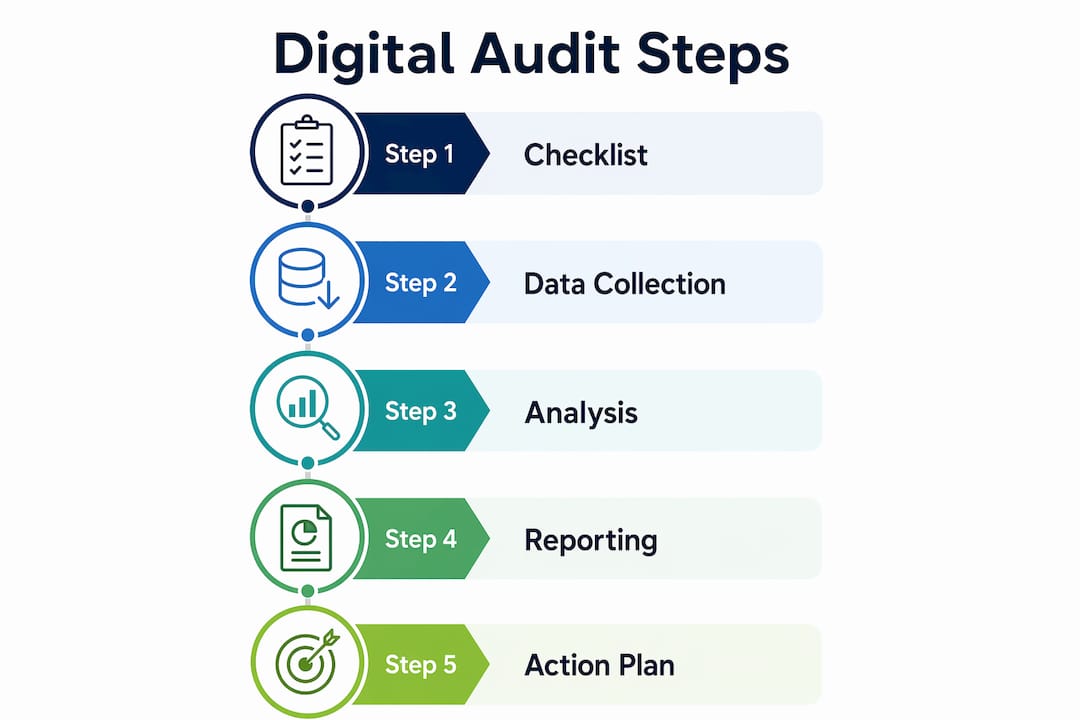
The digital audit process follows five clear phases. Each phase builds on the last, and skipping any one of them produces incomplete findings.
-
Define your business goals. Before collecting any data, write down what success looks like. Are you trying to increase organic traffic, reduce cost per lead, or improve email open rates? Your goals determine which metrics matter and which findings get prioritized.
-
Collect data across all channels. Use Google Analytics and Google Search Console for foundational website and SEO data. Add SEMrush or Ahrefs for keyword and backlink analysis. Use Hotjar or a similar tool for user behavior and conversion rate data. For paid media, pull reports directly from your ad platforms.
-
Audit for consistency and accuracy. An online marketing audit verifies that your contact information, website details, and social profiles are consistent across every platform. Inconsistent information damages trust and hurts local SEO rankings. Check your Google Business Profile, social bios, and website footer against each other.
-
Analyze and identify gaps. Compare your current performance against your goals and against competitors. Look for channels that consume budget without producing conversions. Flag technical issues like slow page speed, broken links, or missing meta tags.
-
Prioritize findings by impact and feasibility. Ranking findings by impact ensures you fix the issues that generate the highest immediate and long-term value first. A broken checkout page outranks a missing alt tag. A paid campaign with a negative return on ad spend outranks a social post with low engagement.
Pro Tip: Build your digital audit checklist before you start collecting data. List every channel you run, every tool you use, and every metric tied to your business goals. A checklist prevents you from skipping channels and makes the analysis phase faster.
What areas does a digital audit cover?
A thorough audit evaluates seven core areas. Each one reveals a different type of problem.
- SEO audit. Reviews technical health, on-page optimization, backlink profile, and keyword targeting. Technical issues like crawl errors and slow load times block search engines from indexing your pages correctly.
- Content audit. Evaluates quality, relevance, engagement metrics, and gaps in your content library. A content strategy review often reveals pages that get traffic but no conversions, and pages that should rank but don't.
- Paid media audit. Checks spend efficiency, audience overlap, ad fatigue, and return on ad spend across Google Ads, Meta, and any other paid channels you run.
- Email marketing audit. Examines deliverability rates, open rates, click-through rates, list segmentation, and automation sequences. Poor segmentation is the most common cause of declining email performance.
- Social media audit. Assesses channel fit, posting frequency, engagement rates, and whether each platform actually reaches your buyers.
- Analytics audit. Confirms that tracking is set up correctly, conversion goals are firing, and attribution models reflect how your customers actually behave. Bad data produces bad decisions.
- Conversion rate optimization (CRO) review. Analyzes landing pages, user flow, and drop-off points. A page with high traffic and low conversions is a revenue leak.
A comprehensive digital audit evaluates technical website performance, SEO, user experience, content strategy, campaign performance, and social media presence together. Reviewing these areas in isolation misses the connections between them. For example, a slow website hurts both SEO rankings and paid ad quality scores at the same time.
| Audit area | Primary question answered |
|---|---|
| SEO | Why aren't we ranking for our target keywords? |
| Content | Which pages drive revenue vs. traffic only? |
| Paid media | Where is ad spend producing negative ROI? |
| Why are open and click rates declining? | |
| Analytics | Is our conversion tracking accurate? |
Common mistakes when performing digital audits
Audit fatigue occurs when a business tries to audit all digital channels at once. The result is a massive report, delayed decisions, and no action taken. Modular, focused audits produce quicker wins and maintain momentum. Start with the one or two channels that have the most direct impact on revenue.
The second most common mistake is producing a report without a ranked action list. Effective digital audits go beyond reports to generate concrete recommendations for improvement. A finding without a recommended fix is just a complaint. Every issue in your audit output should have a clear next step attached to it.
Three other mistakes that stall progress:
- Auditing without defined goals. Without goals, every finding looks equally important. You end up fixing low-priority issues while high-impact problems wait.
- Using data from a single tool. Google Analytics alone misses backlink issues. SEMrush alone misses on-site behavior. Cross-referencing tools produces a fuller picture.
- Treating the audit as a one-time event. Markets shift, algorithms update, and competitors change tactics. A quarterly or semi-annual audit cadence keeps your strategy current.
Pro Tip: After your first audit, focus your next 30 days on fixing only the top three findings. Completing three fixes builds more momentum than starting ten and finishing none.
How to turn audit results into a 90-day action plan
A structured 90-day action plan divides implementation into three monthly phases. This structure prevents the common trap of trying to fix everything at once.
-
Month one: technical fixes. Resolve site speed issues, fix broken links, correct tracking errors, and update inconsistent business information across platforms. These fixes are foundational. Every other improvement depends on a technically sound website and accurate data.
-
Month two: content and SEO improvements. Publish new content targeting keyword gaps identified in the audit. Update underperforming pages with stronger calls to action and better internal linking. Address on-page SEO issues flagged during the review. Check your SMB digital strategy to confirm these content moves align with your broader growth goals.
-
Month three: campaign optimization. Pause or restructure paid campaigns with negative return on ad spend. Test new audience segments based on email audit findings. Reallocate budget from underperforming channels to those showing traction.
| Phase | Focus | Expected outcome |
|---|---|---|
| Month 1 | Technical and tracking fixes | Accurate data, faster site, consistent listings |
| Month 2 | Content and SEO | Improved rankings, better page performance |
| Month 3 | Campaign optimization | Lower cost per acquisition, higher ROI |
Tracking progress through this plan requires setting a baseline before you start. Record your current rankings, traffic, conversion rates, and cost per lead on day one. Review these numbers at the end of each month. If a fix is not producing results by the end of its phase, recalibrate before moving on. The plan is a guide, not a contract.
Key Takeaways
A digital audit is the most direct way for an SMB to identify budget waste, fix performance gaps, and build a prioritized plan that connects marketing activity to revenue.
| Point | Details |
|---|---|
| Define goals first | Set clear business objectives before collecting any audit data. |
| Use multiple tools | Combine Google Analytics, Search Console, and SEMrush for a complete picture. |
| Audit in phases | Focus on one or two channels at a time to avoid fatigue and maintain momentum. |
| Prioritize by impact | Fix high-revenue issues first; rank every finding before acting. |
| Build a 90-day plan | Divide fixes into three monthly phases: technical, content, then campaigns. |
Why most SMBs underuse their audit findings
Most small business owners I work with treat a digital audit as a one-time diagnostic. They run it, read the report, fix two or three things, and move on. That approach leaves most of the value on the table.
The businesses that grow consistently treat audits as a recurring part of their workflow, not a crisis response. They run a focused channel audit every quarter, track the same core metrics each time, and adjust their plan based on what the data shows. That cadence turns an audit from a project into a management habit.
The other misconception I see often is that audits are only for businesses with large budgets or complex operations. A local service business with a basic website and one paid campaign benefits just as much from a structured review. The audit does not need to be exhaustive. It needs to be honest and specific enough to tell you where your next dollar should go.
The businesses that get the most from their audits are the ones that keep the output simple. One ranked list of fixes. One 90-day plan. One person accountable for each item. That structure produces results that a 40-page report never will.
— Tran
How Sourcesnova helps SMBs get real value from digital audits
Sourcesnova works with small and mid-sized businesses that want clear answers, not lengthy reports. The team conducts structured digital audits across SEO, content, paid media, email, and analytics, then delivers a prioritized action plan your team can execute immediately.

Every audit Sourcesnova delivers includes a ranked findings list and a 90-day roadmap, so you always know what to fix first and why. There are no bloated retainers and no jargon-heavy deliverables. If you want to know exactly where your marketing budget is going and what it should be doing instead, visit Sourcesnova to get started with a focused audit built for your business.
FAQ
What is a digital audit?
A digital audit is a systematic review of your business's online marketing channels, including SEO, content, paid ads, email, social media, and analytics, to identify performance gaps and budget waste.
How often should an SMB perform a digital audit?
Most SMBs benefit from a focused channel audit every quarter. A full cross-channel audit once or twice per year keeps strategy aligned with current market conditions.
What tools are used in a digital audit?
Core audit tools include Google Analytics, Google Search Console, SEMrush, Ahrefs, and Hotjar. Each tool covers a different layer of performance data, from traffic and rankings to user behavior.
How long does a digital audit take?
A focused single-channel audit takes one to two weeks. A full cross-channel audit typically takes three to four weeks, depending on the number of channels and the volume of data involved.
What should a digital audit report include?
A digital audit report should include a ranked list of findings, a clear recommendation for each issue, and a phased action plan. Reports without prioritized recommendations rarely produce results.