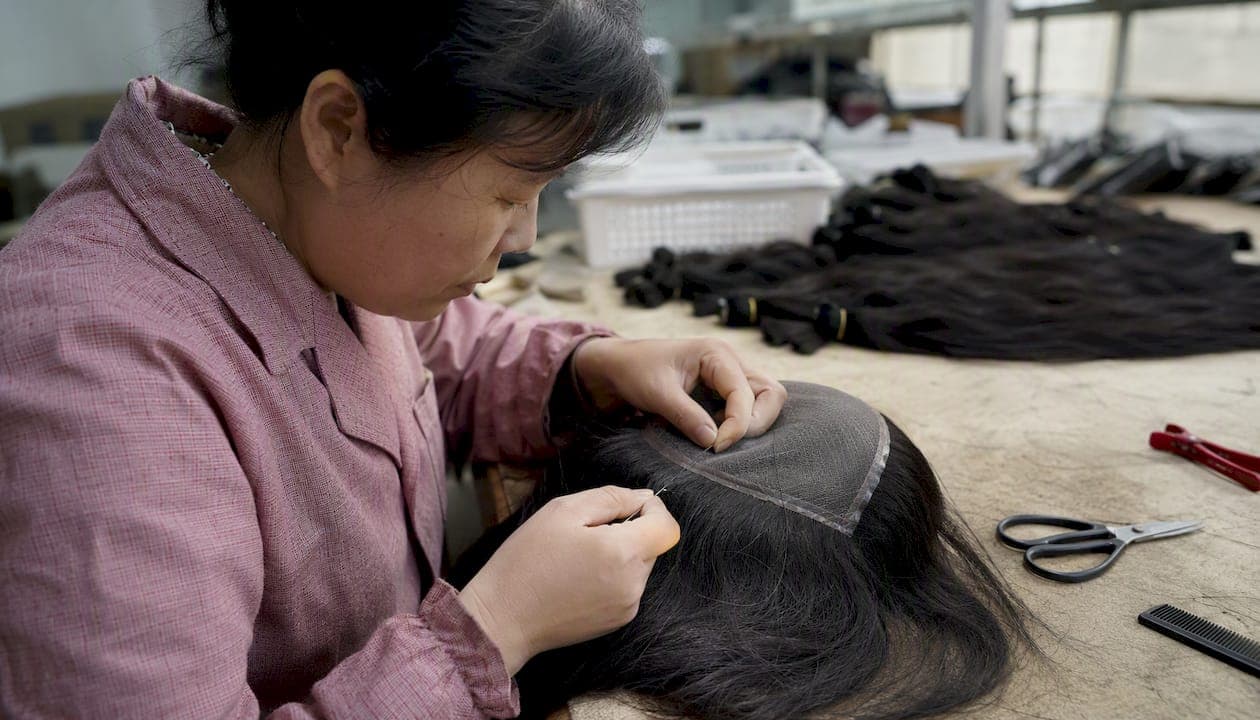
For U.S. wholesale buyers, the most reliable path to consistent, private-label wig supply runs through a vetted shortlist of Chinese manufacturers concentrated in three production hubs: Shandong/Xuchang for premium human hair, Guangzhou for finished and private-label wigs, and Yiwu/Zhejiang for synthetic and fashion styles. The factories below represent the SERP-consensus shortlist most frequently cited by sourcing professionals and trade directories.
Quick-reference shortlist: Henan Rebecca Hair Products, Xuchang Beautyhair, ISEE Hair, Guangzhou Glamor Hair Products, Guangzhou Labor Hair Factory, Qingdao Eminent Hair Products, Qingdao Blueforest Hair, UNice Hair, Nadula Hair, ATM Wigs, KBL Hair, and Guangzhou Jingchen Beauty Hair.
Two trust signals worth noting before you contact anyone: China's Shandong and Yiwu/Zhejiang clusters are globally recognized production hubs, and factories like Helene Hair in Qingdao publish monthly production capacity figures exceeding 50,000 wigs alongside multi-step inspection records. Third-party audit standards to request from any supplier include SGS, BSCI, and ISO 9001. The Canton Fair (held in Guangzhou twice yearly) remains the most efficient venue for meeting multiple factories face-to-face and collecting physical samples in a single trip.
Your immediate next step: identify two or three factories from the shortlist that match your product category, request graded samples with a clear spec sheet, and ask for a third-party inspection report before committing to production. If you prefer a managed approach, Sourcesnova offers B2B sourcing and supplier vetting services purpose-built for U.S. buyers importing from China.
Key Takeaways
China's wig manufacturing industry offers U.S. buyers a complete supply chain spanning premium human hair, private-label finished wigs, and synthetic fashion styles, but supplier selection, quality verification, and logistics planning determine whether that supply chain delivers margin or risk.
| Point | Details |
|---|---|
| Match hub to product type | Shandong/Xuchang for human hair; Guangzhou for finished/private-label; Yiwu for synthetic. |
| Validate before production | Always run graded samples and a third-party inspection before releasing production funds. |
| Know your landed cost | FOB price is only part of the cost; add freight, customs, and packaging to model true margin. |
| Protect your terms in writing | Use a written spec, a golden sample, and milestone-based payment to reduce quality disputes. |
| Sourcesnova accelerates entry | Sourcesnova provides supplier shortlisting, audit coordination, and U.S. launch support for buyers sourcing from China. |
Table of Contents
- Which wig factories in China are best for U.S. buyers?
- How do you evaluate and choose a wig factory in China?
- Profiles of top wig and hair factories worth contacting
- Where do wig factories cluster in China, and what does each hub specialize in?
- What do pricing, MOQs, and shipping to the U.S. actually look like?
- How do you verify quality before committing to full production?
- Practical buying tips for bulk orders: samples, payments, and red flags
- How Sourcesnova helps U.S. buyers source and vet wig factories in China
- What experienced sourcing specialists know that most buyers miss
- Ready to source smarter? Sourcesnova connects U.S. buyers with vetted Chinese suppliers
- Sources
Which wig factories in China are best for U.S. buyers?
The table below covers 12 SERP-consensus factories. For price-sensitive importers, the MOQ and FOB columns are the fastest filter. For private-label brands, focus on the customization and certifications columns first.
How to read this table quickly: MOQ and lead time are the first filter for buyers with a hard launch date. Customization capability matters most if you are building a private-label brand. Certifications and audit availability are the deciding factor when you are placing a first order with an unknown supplier. Because most factories do not publish FOB pricing publicly, treat "contact for quote" cells as a prompt to send a detailed RFQ, not a red flag.
How do you evaluate and choose a wig factory in China?
The core decision rule is straightforward: match the factory's primary specialization to your product strategy before you evaluate anything else. A Guangzhou finisher optimized for private-label lace-front wigs is the wrong partner for a buyer who needs bulk raw Remy bundles. A Shandong processor with deep raw-hair access is the wrong choice for a cosplay retailer who needs fast-turn synthetic styles.
Must-ask questions for every supplier
Send these in your first RFQ email and treat incomplete answers as a signal to probe further:
- Raw hair origin: Where is the hair sourced? Chinese, Indian, Vietnamese, or Brazilian? Is it collected from a single donor (virgin) or pooled and chemically treated (processed Remy)?
- Remy/virgin definition: How does the factory define "Remy"? Ask for a written spec, not a verbal assurance. Definitions vary widely across Chinese suppliers.
- Full-cost FOB example: Request a complete FOB quote for a specific SKU at your target volume, including packaging and labeling.
- MOQ and sample policy: What is the minimum order quantity for production? Is there a separate sample MOQ? What does a sample cost, and is that cost credited against the first production order?
- Lead time: Separate sample lead time from production lead time. Ask what happens to your timeline if raw-hair supply is delayed.
- QC steps: How many inspection checkpoints exist during production? Is there a final pre-shipment inspection? Will the factory share inspection reports?
- Packaging and private-label options: Can the factory produce custom boxes, tags, and inserts? What is the minimum quantity for custom packaging?
- Audit reports: Can the factory provide a current SGS, BSCI, or ISO 9001 report? If not, will they allow a third-party audit at your cost?
- Verified references: Can the factory provide contact details for two current U.S. buyers?
Red flags to watch for
- Vague or inconsistent answers about hair origin and Remy classification
- Refusal to share lab reports, sample photos, or third-party inspection records
- MOQ that changes after you have paid a deposit
- Insistence on 100% upfront payment via wire transfer with no escrow option
- Sample quality that differs noticeably from production samples
Negotiation playbook
MOQs are often negotiable on a first order, especially if you commit to a follow-on production run in writing. Sample costs are almost always credited against production if you place an order.
Pro Tip: To validate Remy claims without shipping full inventory, request a small fiber test sample (10–15 strands) and send it to a U.S. textile lab for cuticle-alignment analysis. The test costs under $100 and catches the most common misrepresentation in the market.
Profiles of top wig and hair factories worth contacting
The factories below represent the most frequently cited names across sourcing directories and trade roundups. Treatment depth varies by how much verifiable public information each factory has published.
Henan Rebecca Hair Products is one of the most established names in the Henan/Xuchang cluster, with a long export history and a product range spanning human-hair wigs, extensions, and braiding hair. Its scale and documented export channels make it a logical first contact for buyers seeking large-volume human-hair supply. Request a current capacity statement and a sample of your target SKU before discussing production terms.
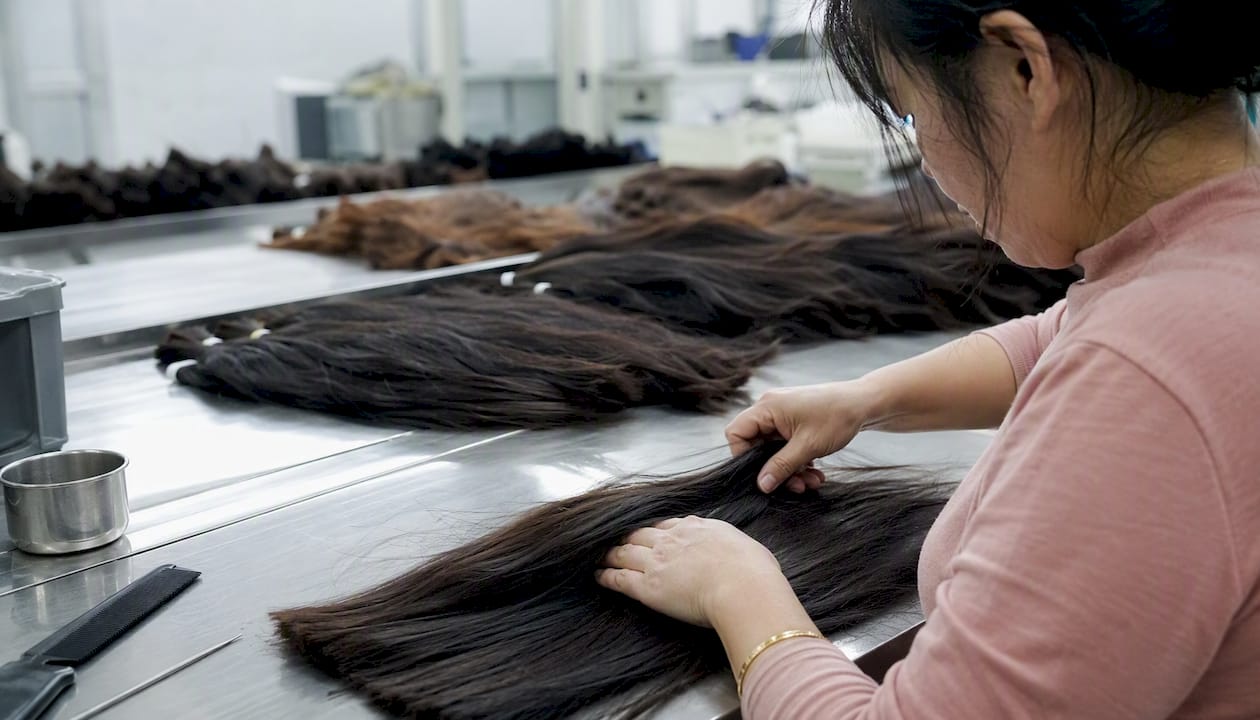
Xuchang Beautyhair (and its related entity Xuchang Beautyhair Fashion) operates within the Xuchang hub, which benefits from vertically integrated human-hair processing that runs from raw-hair collection through finished wig production. Xuchang Great Hair, a comparable Xuchang-area supplier, claims a facility of approximately 20,000 m² with over 300 skilled workers and exports to more than 50 countries. Use that as a benchmark when evaluating Xuchang Beautyhair's capacity claims.
ISEE Hair appears consistently in private-label sourcing lists and is worth contacting if your primary need is custom branding, packaging, and OEM/ODM capability rather than raw-hair volume.
Guangzhou Glamor Hair Products and Guangzhou Labor Hair Factory are both Guangzhou-based finished-wig manufacturers suited to buyers who need high-volume output with private-label packaging. Guangzhou's Pearl River Delta infrastructure supports faster container consolidation than inland Henan factories, which can matter when you are working against a launch date.
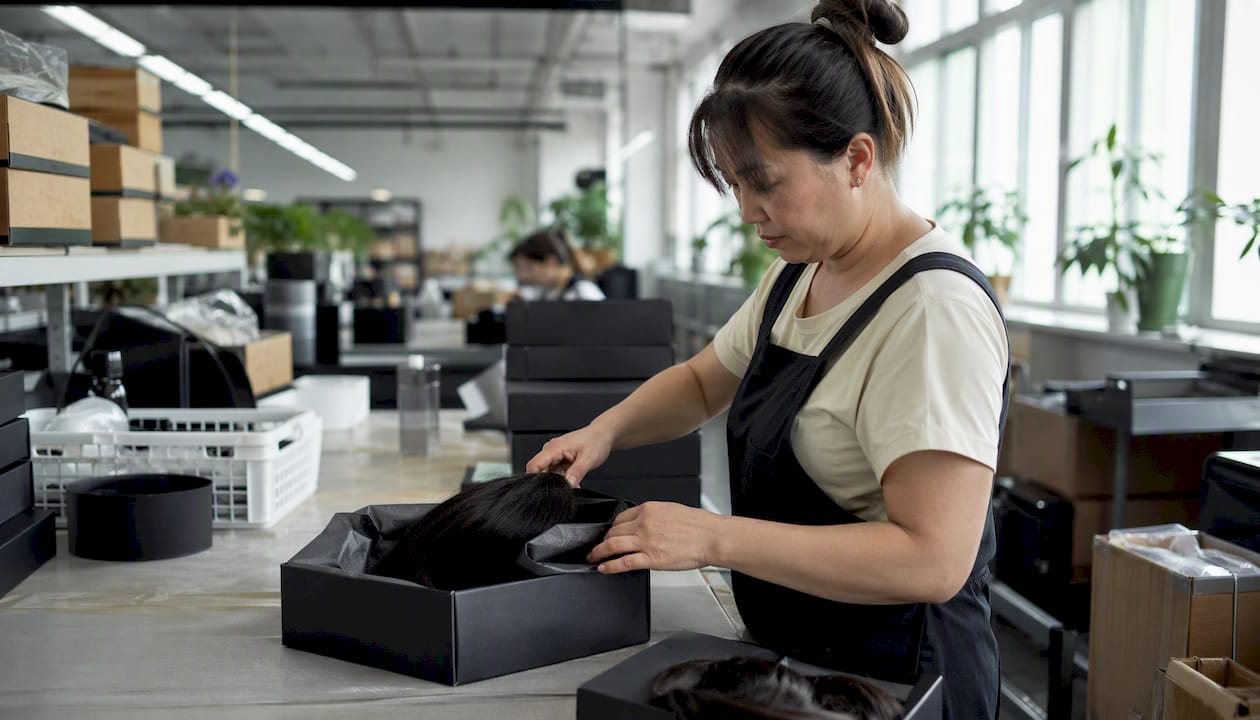
Qingdao Eminent Hair Products, Qingdao Blueforest Hair, and Qingdao Seaforest Hair Products all operate from Qingdao, a port city with direct container routes to U.S. West Coast ports. Helene Hair, another Qingdao-based manufacturer, claims monthly production of over 50,000 wigs and a 200-plus-person trained workforce, which illustrates the scale available from this cluster. Request on-site photos and a production-line video from any Qingdao supplier before committing to samples.
UNice Hair and Nadula Hair have both built consumer-facing brand presence in the U.S. market alongside their wholesale operations, which means their English-language communication and export documentation tend to be more polished than smaller factories. That makes them lower-friction partners for first-time importers.
ATM Wigs appears in multiple top-10 wig manufacturer roundups and is worth including in your initial outreach batch. Request their current sample policy and lead-time commitment in writing.
KBL Hair (Guangzhou Kabeilu) and Guangzhou Jingchen Beauty Hair are both Guangzhou-based private-label specialists. Contact both if you are comparing Guangzhou options, since their pricing and MOQ structures may differ meaningfully at your target volume.
The remaining factories on the full list, including Alpha Hair (Alpha Hair Extension), Leishair (Guangzhou Leis Hair Factory), Guangzhou Fantasy Hair, Stella Hair, Xuchang Baba Hair Products, TedHair, Jiffy Hair, Rebe Hair, Xuchang Wowqueen, Yuzhou City Xiao Yuan, and KBL/Guangzhou Kabeilu, are all active suppliers that appear in trade directories. For these, the fastest approach is a standardized RFQ email with your tech pack attached. Their responses will tell you more than any directory listing.
Where do wig factories cluster in China, and what does each hub specialize in?
China's wig manufacturing geography is not uniform. Where a factory sits determines its raw-material access, finishing capability, and export logistics, all of which affect your landed cost and lead time.
Shandong province and the Xuchang/Juancheng corridor in Henan form China's primary human-hair processing belt. Juancheng Xinhua Hair, a representative Shandong operation, describes a factory footprint of approximately 38,800 m² and sources Chinese, Vietnamese, and Indian hair. This region's strength is raw-hair access and processing depth: factories here sort, treat, and align cuticles at scale, which is why premium Remy and virgin human-hair products predominantly originate here. Xuchang extends that capability with a vertically integrated chain that runs from raw collection through finished wig construction.
Guangzhou and the Pearl River Delta specialize in finished wigs, private-label production, and high-volume output. Factories here tend to have stronger packaging and branding infrastructure, better English-language sales teams, and faster container access through Nansha and Yantian ports. If your strategy is a private-label brand launch rather than raw-hair sourcing, Guangzhou is the right starting point.
Yiwu and the broader Zhejiang province are the center of gravity for synthetic, fashion, and cosplay wigs. Factories in this cluster produce high-SKU-count lines at competitive price points and are well-suited to seasonal or trend-driven buyers. The Yiwu International Trade Market is the world's largest small-commodity wholesale market and a practical sourcing venue for synthetic styles.
- Shandong/Xuchang: Best for premium human hair, Remy, virgin; deep raw-material access; longer lead times
- Guangzhou/Pearl River Delta: Best for finished wigs, private label, high volume; strongest export infrastructure
- Yiwu/Zhejiang: Best for synthetic, fashion, cosplay; fastest SKU development; lower per-unit cost
Pro Tip: If your launch timeline is under 60 days, prioritize Guangzhou or Yiwu factories. Their container consolidation infrastructure and finished-goods inventory mean shorter production cycles. Shandong and Xuchang factories are the right choice when product quality and hair origin traceability matter more than speed.
What do pricing, MOQs, and shipping to the U.S. actually look like?
Pricing in this category spans a wide range depending on hair type, construction method, and order volume. The bands below are typical market ranges; your actual FOB quote will depend on your spec, volume, and negotiating position.
Note: All figures are indicative ranges for planning purposes. Request a formal FOB quote from each factory and consult a licensed U.S. customs broker for current HTS duty rates, which can change. The Sourcesnova U.S. launch guide covers export documentation and logistics considerations in more detail.
Shipping logistics checklist
- Primary export ports: Qingdao (Shandong/Xuchang factories), Guangzhou/Nansha or Yantian (Pearl River Delta), Shanghai (central and Yiwu factories)
- Recommended incoterms for first orders: FOB (you control freight and insurance from the port) or CIF (factory arranges freight, you pay a bundled cost). FOB gives you more cost visibility.
- LCL vs. FCL: Less-than-container-load (LCL) is practical for sample orders and pilot runs under roughly 10 cubic meters. Full-container-load (FCL) becomes cost-effective at higher volumes and cuts per-unit freight cost significantly.
- Transit time: Sea freight from Chinese ports to U.S. West Coast (Los Angeles/Long Beach) typically runs 14–21 days. East Coast ports (New York/Savannah) add 7–10 days. Air freight cuts transit to 3–5 days but costs 6–10 times more per kilogram.
- US import documentation: Commercial invoice, packing list, bill of lading, and a certificate of origin. If your product contains synthetic fibers, confirm fiber content labeling requirements under the Textile Fiber Products Identification Act.
For a practical breakdown of U.S. channel and compliance steps, the guide to selling Chinese products in the U.S. covers the documentation and labeling requirements importers commonly overlook.
How do you verify quality before committing to full production?
Always validate through graded samples and a third-party pre-production inspection before releasing production funds. That sequence catches the most common quality failures at the lowest possible cost.
Sample program
- Order a batch of three to five reference samples per SKU, specifying exact construction (lace type, cap size, hair length, density, and color).
- Conduct wear-and-wash tests: wash each sample three to five times using standard consumer shampoo and assess shedding, tangling, and color retention.
- For human-hair products, send fiber samples to a U.S. textile testing lab for cuticle-alignment and fiber-origin analysis. This is the only reliable way to verify Remy claims.
- For synthetic wigs, check heat resistance against the manufacturer's stated specification. Sourcesnova's synthetic wig styling guide explains the manufacturing differences that affect heat tolerance and durability.
- Define acceptable tolerances in writing before production begins: maximum shedding per wash, minimum density variance, and color delta.
Factory verification documents to request
- ISO 9001 certificate: Confirms a documented quality management system is in place.
- BSCI or SA8000 audit report: Covers social compliance and labor standards; increasingly required by U.S. retail buyers.
- SGS or Bureau Veritas inspection report: Third-party product testing and factory audit. Ask for the most recent report and check the audit date.
- On-site photos and production-line video: Request current footage, not stock images. Look for production capacity evidence: worker count, machinery, and in-process goods.
- Verified buyer references: Two current U.S. buyers with contact details. Call them.
JINHAN Wig Factory, which has operated since 1997, reports sample development turnarounds of 3–7 days for some styles, illustrating that experienced factories can move quickly when specs are clear. A tight spec sheet is the single biggest lever you have over sample quality.*
Practical buying tips for bulk orders: samples, payments, and red flags
A disciplined procurement sequence reduces both financial risk and quality surprises. The steps below apply whether you are placing your first order or scaling an existing line.
Step-by-step process
- Prepare a tech pack before contacting any factory. Include construction specs, materials, dimensions, color references, and target FOB price. Factories that receive a complete tech pack respond faster and quote more accurately.
- Pay for samples. A factory that offers free samples without a deposit is not necessarily more trustworthy; it may simply be recovering sample costs in the production price. Pay the sample fee, get a receipt, and confirm in writing that the cost is credited against your first production order.
- Test samples rigorously against your written spec before approving production. Do not approve based on visual inspection alone.
- Place a pilot order at 20–30% of your intended production volume. Include milestone-based payment terms and a written penalty clause for late delivery.
- Release final production payment only after a third-party pre-shipment inspection confirms the goods match the approved sample.
Payment terms and safe methods
Alibaba Trade Assurance and similar escrow platforms add a dispute-resolution layer that wire transfer alone does not provide.
Red flags checklist
- FOB quotes that are 30% or more below market average for the same spec (usually signals hair grade substitution)
- Resistance to third-party inspection or on-site visits
- Sample quality that varies between the first and second batch
- Pressure to finalize payment before inspection is complete
- No verifiable U.S. buyer references
Pro Tip: Protect your private-label packaging on first orders by registering your brand name and logo with U.S. Customs and Border Protection through their Intellectual Property Rights e-Recordation (IPRR) system before your first shipment arrives. It costs nothing and gives CBP authority to detain counterfeit goods bearing your mark at the border.
How Sourcesnova helps U.S. buyers source and vet wig factories in China
Sourcesnova offers sourcing, supplier vetting, and market-entry services built specifically for U.S. wholesale buyers and Asian manufacturers entering the North American market. The agency's work on the U.S. launch guide for wig manufacturers reflects direct experience with the logistics, compliance, and channel-entry steps that generic sourcing directories do not cover.
Concrete services relevant to wig sourcing include:
- Supplier shortlisting: Identifying and pre-screening factories against your product spec, target price, and required certifications, so your outreach goes to qualified suppliers only.
- Factory audit coordination: Arranging SGS, BSCI, or independent third-party audits and consolidating reports into a single supplier scorecard.
- Sample program management: Coordinating sample orders, tracking delivery, and managing feedback loops between your team and the factory.
- Landed-cost modeling: Building a full cost model from FOB through U.S. customs, freight, and fulfillment so you know your margin before you commit to production.
- U.S. channel launch support: Connecting you with U.S. distributors, setting up RFQ-ready product pages, and running wholesale lead generation through paid and organic channels.
Before contacting Sourcesnova, prepare the following: your expected monthly or annual unit volume, a product spec or reference sample, your target FOB price per unit, and your intended U.S. launch date. That information allows the team to match you with the right factory tier and build a realistic timeline.
What experienced sourcing specialists know that most buyers miss
The fastest way to reduce time-to-market is a tight sample program paired with a fixed pilot order that has measurable QC milestones written into the contract before production begins. Most delays and quality disputes trace back to one root cause: the buyer approved production without a written spec that the factory could be held to.
A few practitioner observations that rarely appear in generic roundups:
- Brief factories with visuals, not words. A photo of the lace cap construction you want, a color swatch, and a density reference image communicate more precisely than a paragraph of written description. Factories that receive clear visual briefs produce better first samples.
- Build buffer stock into your import plan. Sea freight from China to the U.S. carries a realistic variance of plus or minus 7–10 days. Plan your launch inventory assuming the later end of that range.
- Document your quality standard with a physical golden sample. Send the factory one approved sample, keep one in your office, and reference both in the contract. Written tolerances alone are not enough.
- Understand communication cadence. Chinese factories typically operate on a Monday-to-Saturday schedule, and responses to emails sent Friday afternoon U.S. time may not arrive until Monday China time. Build that lag into your approval timelines.
- Know when to use a sourcing agent. If you are placing your first order, managing more than three supplier relationships simultaneously, or entering a new product category, a sourcing agent reduces coordination overhead significantly. For repeat orders with a proven supplier, direct procurement is more cost-efficient. Sourcesnova's overview of sourcing service alternatives covers the decision criteria in detail.
Ready to source smarter? Sourcesnova connects U.S. buyers with vetted Chinese suppliers
Sourcing directly from wig factories in China gives you access to the world's most complete hair manufacturing supply chain, but the vetting, audit coordination, and logistics work is substantial. Sourcesnova handles that work for U.S. wholesale buyers and private-label brands: supplier shortlisting, factory audit coordination, sample program management, landed-cost modeling, and U.S. channel launch from a single engagement.
The process starts with a brief: your product spec, target volume, and launch date. From there, Sourcesnova builds a shortlist of audited suppliers, manages your sample program, and models your full landed cost before you commit to production. No bloated retainers, no vague deliverables. Visit Sourcesnova to submit your sourcing brief and receive a response within one business day.
Sources
The sources below are the most useful references for buyers who want to verify factory capacity, confirm sample policies, or go deeper on U.S. import logistics.
- Shunfa Hair — Wig
- China Wig & Hair Pieces Manufacturers, Suppliers, Factory - Xinhua
- Professional Wig, Hair Extension Manufacturer - Great Hair
- Helene Hair - Wig & Eyelash Manufacturer
- Over 27 Years Top Wig Manufacturer & Supplier - JINHAN WIG