
Your digital footprint is the unique trail of data you create every time you interact with the internet. According to CISA, this trail, sometimes called a "digital shadow," includes everything from public social media posts to subtler traces like tracking cookies and submitted forms. It covers both what you choose to share and what gets collected without your direct knowledge.
Every online interaction contributes to this trail:
- Social media posts, comments, and profile information
- Online form submissions and account registrations
- Website visits and browsing history
- Cookies and tracking pixels installed by websites
- Location data collected by apps and devices
- Emails sent and files downloaded
Together, these traces form a profile that businesses, advertisers, employers, and threat actors can access and analyze.
What are the two types of digital footprints?
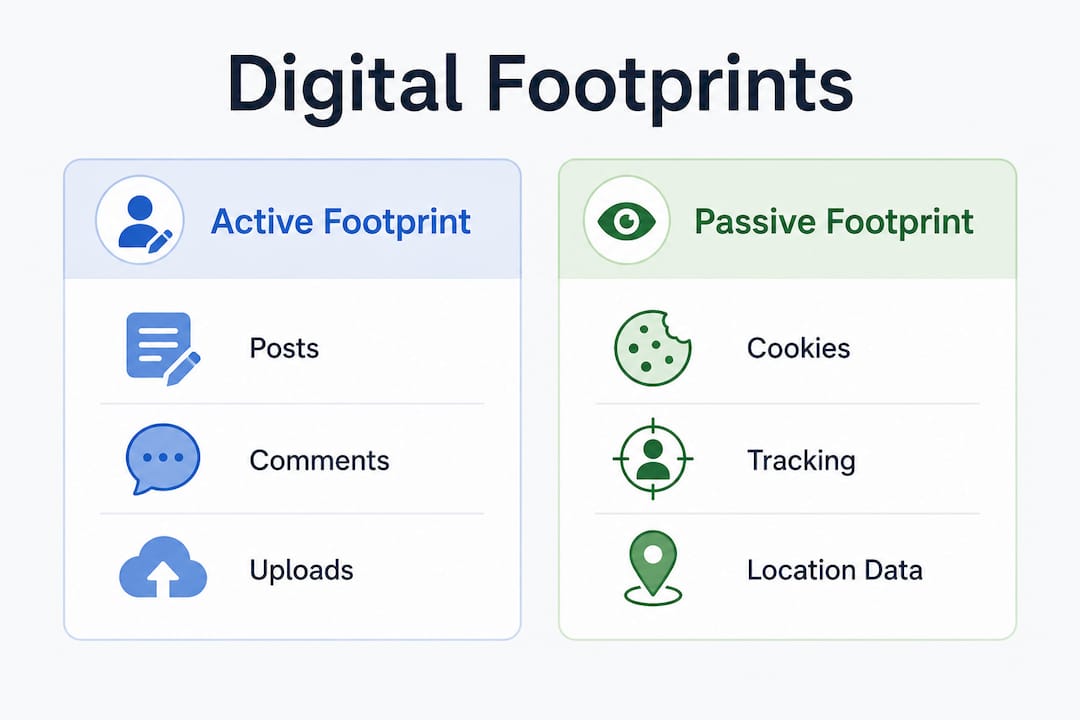
Digital footprints fall into two categories: active and passive. Understanding the difference helps you recognize where your data comes from and which parts you can realistically control.
Active digital footprints are created through deliberate actions:
- Posting on social media platforms like Facebook, Instagram, or LinkedIn
- Filling out online forms, surveys, or account registrations
- Publishing reviews, blog comments, or forum replies
- Sending emails or direct messages
Passive digital footprints are collected without your direct intent, often without your awareness:
- Cookies installed on your device when you visit a website
- IP address monitoring that logs your location and browsing patterns
- App permissions that track your location, contacts, or usage habits
- Behavioral data collected by advertising networks across multiple sites
The line between these two types blurs in practice. As CISA notes, clicking "accept" on a cookie consent banner is an intentional act, yet it generates passive tracking outputs like advertising profiles you never see. Passive footprints are harder to notice precisely because they happen in the background, which makes them the greater privacy risk for most people.
What does a digital footprint actually look like in practice?
Concrete examples make the scope of digital footprints easier to grasp. They span nearly every category of online activity.
Social and communication activity:
- A LinkedIn profile with your work history and endorsements
- Tweets, Instagram photos, or TikTok videos posted publicly
- Emails stored on third-party servers like Gmail or Outlook
Transactional and financial activity:
- Purchase history on e-commerce platforms
- Saved payment details and shipping addresses
- Subscription sign-ups tied to your email address
Behavioral and background tracking:
- Browser history recorded by your internet service provider
- Retargeting cookies that follow you from one site to another
- Data broker profiles compiled from public records, loyalty programs, and app data
Data brokers are a category many people overlook. These companies aggregate information from dozens of sources to build detailed profiles, which they sell to marketers, insurers, and employers. Your footprint extends well beyond what you post publicly.
Why do digital footprints matter for privacy, security, and reputation?

Digital footprints directly affect your online reputation and security. The size and content of your footprint shape how others perceive you and how exposed you are to threats.
Key risks include:
- Identity theft: Personal details scattered across sites give attackers enough information to impersonate you.
- Phishing attacks: Threat actors use footprint data to craft targeted messages that appear legitimate.
- Reputation damage: Old posts, photos, or comments can surface years later in professional or personal contexts.
- Data profiling: Advertisers and data brokers build behavioral profiles that influence the prices you see, the ads you receive, and even credit decisions.
- Compliance exposure for businesses: Organizations that fail to manage employee and customer data footprints face regulatory risk under frameworks like the Children's Online Privacy Protection Act.
CISA explicitly warns that threat actors use tracking and phishing techniques to access sensitive information through footprint-related entry points. A large, unmanaged footprint is a larger attack surface.
How are digital footprints collected and tracked?
Footprints accumulate from far more channels than most people realize, not just from what you post publicly. The collection happens continuously, across devices and platforms.
Common collection channels include:
- Websites: Every page visit logs your IP address, browser type, and time on site.
- Email providers: Message content, metadata, and contact lists are stored on servers.
- Mobile apps: Apps request permissions for location, camera, microphone, and contacts, often beyond what their core function requires.
- Online forms: Any information you submit, including partial form fills, can be stored.
- Search engines: Search queries build a behavioral profile tied to your account or device.
- Wi-Fi networks: Public networks can log the sites you visit and the data you transmit.
Seemingly harmless activity compounds over time. A single app permission, a cookie consent, or a loyalty program sign-up each adds a data point. Those points connect across platforms to form a detailed picture of your habits, preferences, and movements.
How can you protect and reduce your digital footprint?

Completely erasing a digital footprint is not realistic, but reducing it over time is both practical and effective. The goal is to limit future data generation while tightening control over what already exists.
Practical steps to reduce your footprint:
- Audit your accounts: Delete or deactivate accounts on platforms you no longer use.
- Review privacy settings: Tighten settings on social media, browsers, and mobile apps to limit data sharing.
- Manage cookies: Use browser settings or extensions to block third-party cookies and clear existing ones regularly.
- Limit app permissions: Revoke location, microphone, and contact access for apps that do not need them.
- Use a VPN: A virtual private network masks your IP address, reducing passive tracking by websites and networks.
- Opt out of data brokers: Many data broker sites offer opt-out processes, though these require ongoing attention.
- Think before you post: Public posts are the hardest part of a footprint to retract once shared.
Pro Tip: Footprint reduction is a gradual process, not a one-time cleanup. Small, consistent changes, like reviewing app permissions monthly or clearing cookies weekly, accumulate into meaningful privacy gains over time.
For small businesses, managing your digital brand presence is part of the same discipline. Every employee account, business listing, and customer interaction contributes to your organization's collective footprint.
Expert insights on managing your footprint as an individual or small business
Practitioners who work with digital privacy treat footprints as a growing time series, not a static profile. Every login, form fill, and cookie consent adds a data point that may be connected to other data later, even if it was never public. That framing changes how you approach management.
Key expert recommendations:
- Go beyond name searches: Assessing your risk requires looking at web visit history, submitted data, and behavioral patterns, not just what appears when you Google yourself.
- Address both active and passive data: Privacy controls must cover background tracking, not just what you post.
- Treat employee footprints as organizational risk: For small businesses, an employee's personal accounts and device activity can expose company data if not managed carefully.
- Combine behavioral and technical controls: Technical tools like VPNs and cookie blockers work best alongside behavioral habits like limiting what you share and where.
A digital audit gives small businesses a structured way to assess their full footprint across platforms, accounts, and employee activity. For manufacturing companies and other industries handling sensitive operational data, the privacy risks tied to digital footprints extend into supply chain and client confidentiality.
How digital footprints affect employment and social opportunities
Employers, universities, and professional networks routinely review candidates' online presence before making decisions. A footprint that includes controversial posts, inconsistent professional information, or evidence of poor judgment can cost someone a job offer or a promotion, even years after the content was created.
The reverse is also true. A well-managed footprint, with a consistent LinkedIn profile, published work, and positive community engagement, functions as a professional asset. Recruiters actively search for candidates online, and a thin or absent footprint can raise questions just as a problematic one does.
Social relationships are affected too. Public posts, tagged photos, and group memberships are visible to people beyond your intended audience. Privacy settings reduce exposure but rarely eliminate it entirely, since connections can share or screenshot content without your knowledge.
How digital footprints drive online advertising and data profiling
Advertising platforms use footprint data to build behavioral profiles that determine which ads you see, at what price, and on which platforms. Every search query, product page visit, and video watched contributes to a profile that ad networks use to predict your interests and purchasing intent.
This process, called behavioral targeting, relies on both direct and indirect data collected by data brokers and tracking systems. A single visit to a product page can trigger retargeting ads across dozens of unrelated websites for weeks. The profile built from your footprint also influences dynamic pricing on travel sites, insurance quotes, and financial products.
For businesses, understanding how advertising platforms use customer footprint data is part of responsible data governance. Customers increasingly expect transparency about how their data is collected and used, and regulations like the proposed Secure Data Act reflect growing legislative pressure to give consumers more control over their personal data.
Key Takeaways
Your digital footprint is a continuously growing trail of data formed by both your intentional actions and passive tracking, and managing it requires addressing both active sharing habits and background data collection.
| Point | Details |
|---|---|
| Two types of footprints | Active footprints come from deliberate actions; passive ones are collected without direct user intent. |
| Footprints are a time series | Every login, form fill, and cookie consent adds data that can be connected to other data later. |
| Risk goes beyond public posts | Attackers exploit web visit history and submitted data, not just public social media profiles. |
| Reduction is realistic; erasure is not | Limiting future data generation and deleting unused accounts reduces exposure over time. |
| Businesses carry collective footprints | Employee accounts and device activity contribute to organizational risk, not just individual exposure. |