
Branding is defined as the process of building a unique identity that shapes how customers perceive, trust, and choose a business over its competitors. The role of branding extends far beyond a logo or color palette. It encompasses visual identity, brand voice, core values, and the emotional connection a business creates with its customers. 80% of consumers trust brands they use more than they trust media, government, or NGOs. That statistic reveals branding as a strategic financial asset, not a marketing decoration. For business owners and marketers, understanding how brand identity drives customer loyalty and market differentiation is the foundation of every growth decision.
What is the role of branding in building customer trust?
Trust is the most direct output of effective branding. When customers recognize a consistent brand across every touchpoint, from your website to your packaging to your social media tone, they form a reliable mental model of what you stand for. That reliability converts into purchasing confidence.
The numbers confirm this. 68% of customers are willing to pay more for products from brands they trust. That pricing power is not accidental. It results from deliberate brand investment over time, where every customer interaction reinforces the same promise.
Branding operates on two levels simultaneously: functional and emotional. The functional and emotional values of a brand combine to create experiences that competitors cannot easily copy. A competitor can match your product features. They cannot easily replicate the feeling your brand creates. That gap is your competitive moat.
Brand trust also drives measurable loyalty metrics. Repeat purchase rate and customer lifetime value both rise when customers feel a strong brand connection. A customer who trusts your brand does not need to re-evaluate every purchase. They return by default, which lowers your acquisition cost and raises your margin.

Pro Tip: Track repeat purchase rate alongside Net Promoter Score (NPS) quarterly. Together, these two metrics give you the clearest picture of whether your brand trust is growing or eroding.
Key behaviors driven by brand trust include:
- Repeat purchases without price comparison
- Word-of-mouth referrals that reduce paid acquisition costs
- Tolerance for price increases when the brand relationship is strong
- Forgiveness during service failures, because trust creates goodwill reserves
- Preference in commoditized markets where products are functionally identical
Transparency in marketing reinforces every one of these behaviors. Brands that communicate honestly about their values, sourcing, and practices build deeper trust faster than brands that rely on polished messaging alone.
How does branding affect financial performance?
Branding is a financial asset with measurable returns. Research shows that a $1 increase in brand value correlates with a $1.76 gain in company turnover and a $0.16 rise in net income. That ratio means brand investment compounds. Every dollar you put into building brand equity generates more than a dollar back in revenue.
The financial impact of branding also shows up in market valuations. 76% of investment analysts say brand strategy significantly affects price-to-earnings ratios and company valuations. Boards and investors who ignore brand strategy risk misreading their own company's market position.
Strong brands stabilize demand during economic downturns by smoothing revenue volatility. This is the shock absorber effect. When markets contract, customers cut spending on unfamiliar or generic products first. Brands with strong emotional equity retain customers longer, protecting cash flow when it matters most.
Pro Tip: Treat brand investment as a line item in your annual budget, not a discretionary spend. Businesses that cut brand budgets during downturns often lose market share that takes years to recover.
The table below summarizes the key financial metrics linked to branding strength:
| Financial Metric | Branding Impact |
|---|---|
| Company turnover | $1.76 gain per $1 increase in brand value |
| Net income | $0.16 rise per $1 increase in brand value |
| Price-to-earnings ratio | Affected by brand strategy per 76% of analysts |
| Revenue volatility | Reduced by strong brand equity during downturns |
| Customer acquisition cost | Lowered by brand-driven word-of-mouth and loyalty |
For small businesses, the financial case for branding is especially direct. A well-branded small business commands higher prices, attracts better partners, and retains customers without constant promotional spending. The impact of branding on pricing power is one of the clearest returns on marketing investment available.
What are the key components of an effective branding strategy?
A brand strategy is only as strong as its foundational elements. Skipping any one of them creates inconsistency, and inconsistency destroys trust faster than any competitor can.
Brand guidelines form the operating manual for your brand. They define how your brand looks, sounds, and behaves across every channel. Without them, your team makes inconsistent decisions that fragment the customer experience.
The core components of a brand strategy every business owner should build:
- Target audience profile. Define exactly who your customer is, including their values, pain points, and buying triggers. Branding that tries to speak to everyone speaks to no one.
- Brand voice and tone. Decide how your brand communicates. Is it authoritative and direct? Warm and conversational? Your voice must stay consistent from your website copy to your customer service emails.
- Mission and values statement. State what your business stands for beyond profit. Customers align with brands that share their values. This is where emotional branding begins.
- Positioning statement. Define your place in the market relative to alternatives. A clear positioning statement tells customers why you are the right choice for them specifically.
- Visual identity system. Your logo, color palette, typography, and imagery must work together to create instant recognition. Visual consistency builds familiarity, and familiarity builds trust.
- Brand story. A compelling narrative that connects your origin, mission, and customer benefit. Stories are more memorable than feature lists. They give customers a reason to care.
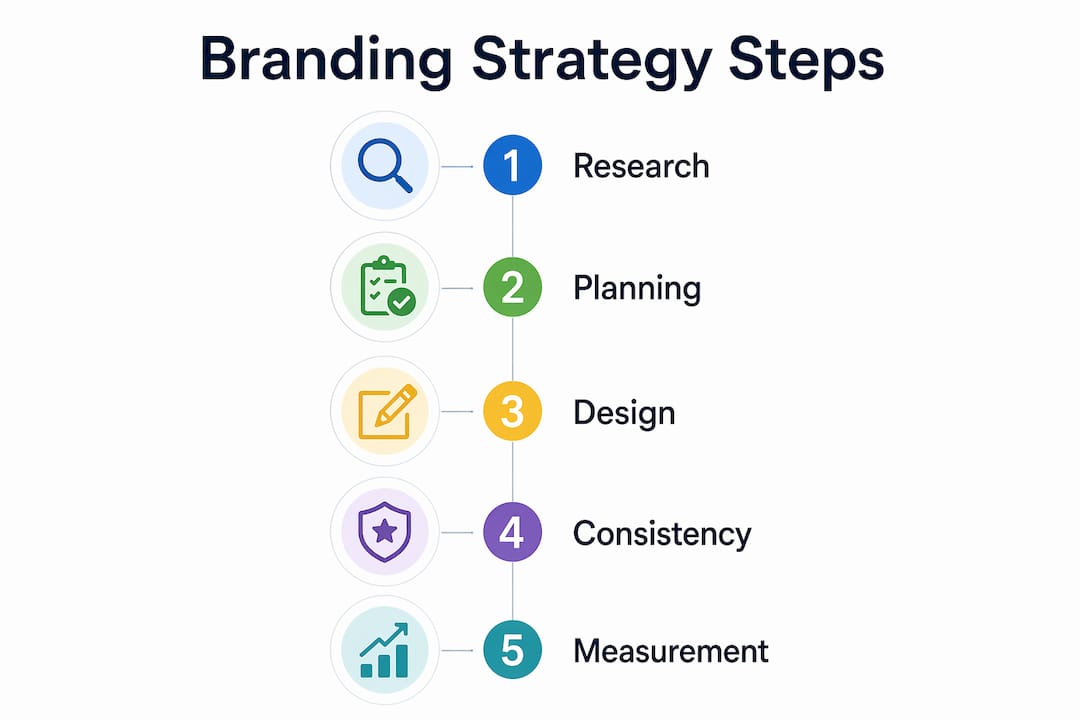
Consistency across all customer touchpoints is the execution standard that separates strong brands from weak ones. Your brand must look and sound the same on your website, your packaging, your social media, and in person. Building a strong digital brand requires applying these elements with discipline across every online channel your customers use.
Domestic packaging choices also reinforce brand identity in ways many business owners overlook. Packaging and branding alignment directly affects how customers perceive product quality before they even open the box.
How do you measure branding success and evolve your strategy?
Branding without measurement is guesswork. You need specific metrics to know whether your brand is gaining ground or losing it.
Brand KPIs span awareness to loyalty, and each metric tells a different part of the story. The most useful metrics for business owners and marketers include:
- Brand awareness: The percentage of your target market that recognizes your brand unprompted. Measured through surveys and search volume trends.
- Brand perception: How customers describe your brand in their own words. Measured through sentiment analysis and open-ended survey responses.
- Net Promoter Score (NPS): How likely customers are to recommend you. A direct proxy for brand loyalty and emotional connection.
- Repeat purchase rate: The share of customers who buy from you more than once. High repeat rates signal strong brand preference.
- Customer lifetime value (CLV): The total revenue a customer generates over their relationship with your brand. Strong brands consistently raise CLV.
A periodic brand audit identifies gaps between how you intend your brand to be perceived and how customers actually perceive it. Run a brand audit at least once a year. Review every customer touchpoint, from your website and social media to your invoices and packaging, and assess whether each one reinforces your brand promise.
Brand strategy also needs to evolve with your customers. Integrating sustainability commitments, ethical sourcing practices, and social values into your brand narrative is no longer optional for many audiences. Customers increasingly choose brands whose values match their own. Brands that ignore this shift lose relevance over time, regardless of product quality.
Key Takeaways
Strong branding is the single most reliable driver of customer trust, pricing power, and long-term revenue stability for any business.
| Point | Details |
|---|---|
| Brand trust drives pricing power | 68% of customers pay more for brands they trust, giving strong brands a direct margin advantage. |
| Branding compounds financially | A $1 increase in brand value generates $1.76 in turnover, making brand investment measurable and repeatable. |
| Consistency builds recognition | Brand guidelines covering voice, visuals, and values must apply across every customer touchpoint. |
| Measurement reveals brand health | Track NPS, repeat purchase rate, and brand perception annually to identify gaps and guide strategy. |
| Branding stabilizes revenue | Strong brands reduce demand volatility during economic downturns, protecting cash flow when it matters most. |
Branding is a board-level decision, not a marketing task
Most business owners I work with treat branding as something to sort out after the product is ready. They spend months perfecting their offer, then spend two weeks picking a logo and calling it done. That sequence is backward.
The brands that hold pricing power through recessions, attract loyal customers without constant promotions, and command premium valuations are the ones where leadership treated brand strategy as a core business decision from day one. Not a marketing deliverable. A board-level asset.
The most common mistake I see is treating branding as a short-term expense rather than a long-term investment. A business that cuts its brand budget during a slow quarter is borrowing against its future. The customers it loses to stronger brands during that period rarely come back.
My practical advice: balance your emotional and functional brand values deliberately. Functional clarity tells customers what you do. Emotional resonance tells them why it matters. You need both. A brand that only communicates features competes on price. A brand that connects emotionally commands loyalty.
— Tran
How Sourcesnova supports your brand growth
Building a brand that drives real customer loyalty and measurable revenue growth requires more than good intentions. It requires consistent execution across every channel where your customers find you.
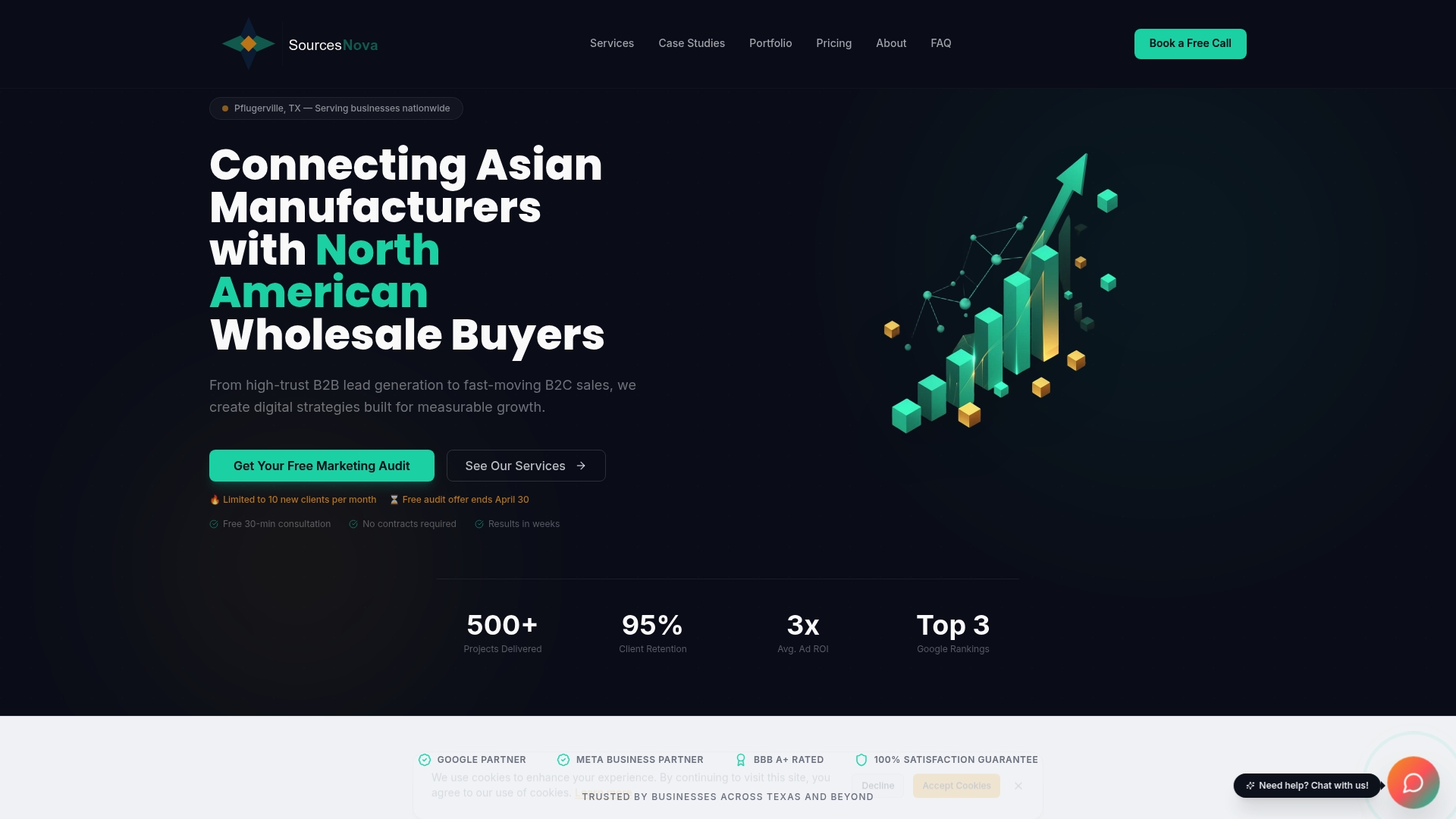
Sourcesnova is a full-service digital growth agency built for local and small-to-mid-size businesses that want to look professional, get found online, and turn visitors into paying customers. The team works across brand development, digital marketing, and content strategy, with no bloated retainers and no vanity reports. Clients in retail, e-commerce, beauty, and service industries trust Sourcesnova to treat their business with the same care they would. Visit Sourcesnova to see how the team can help you build a brand that works as hard as you do.
FAQ
What is the role of branding in marketing?
Branding in marketing defines how a business is perceived by its audience. It shapes customer expectations, differentiates the business from competitors, and creates the emotional connection that drives purchase decisions.
Why does brand trust matter for pricing?
68% of customers pay more for products from brands they trust. Brand trust removes price sensitivity by replacing comparison shopping with preference.
How does branding affect company valuation?
Brand strategy affects price-to-earnings ratios and overall company valuations, with 76% of investment analysts confirming that strong brand strategy significantly influences how markets value a business.
What metrics measure branding success?
The most reliable brand metrics are brand awareness, NPS, repeat purchase rate, and customer lifetime value. Together, they show whether your brand is building loyalty or losing ground.
How often should a business conduct a brand audit?
A brand audit should run at least once a year. It identifies gaps between your intended brand perception and actual customer experience across all touchpoints.