
Choosing the wrong digital ad format doesn't just waste money. It wastes time, erodes confidence, and pushes real customers toward competitors who got their strategy right. For local and small-to-mid-size businesses in the USA, the menu of options has grown dramatically: search ads, social call ads, Performance Max, display, video, directory listings, and more. Each promises results. Few come with honest guidance on where to start. This article cuts through that noise with concrete, real-world digital advertising examples and a clear framework to match each format to your actual business goals, budget, and operational capacity.
Table of Contents
- How to choose the right digital ad format
- High-intent search ads: Google Search and Performance Max
- Standout Meta ad examples: Call ads, instant forms, and hyperlocal targeting
- Awareness and creative engagement: Display, video, and directory listings
- Comparison table: Which digital ad examples fit which goals?
- Our take: Local SMBs should start narrow, then layer on complexity
- Start your digital advertising journey with expert support
- Frequently asked questions
Key Takeaways
| Point | Details |
|---|---|
| Start with intent-driven ads | Google Search and Meta call ads give local SMBs the highest odds of direct customer response. |
| Match formats to your goals | Choose ad types based on whether you want leads, awareness, or creative engagement. |
| Hyperlocal targeting boosts efficiency | Narrow location-based ads yield higher conversion rates with less wasted spend. |
| Test, learn, then scale | Begin with one ad channel, refine what works, and layer on complexity as results prove out. |
How to choose the right digital ad format
Now that you know what's at stake, let's clarify how you should evaluate your options before committing budget to any single channel.
The foundation of any smart ad decision is understanding what digital marketing means for your specific business context. Not every format fits every goal. The key decision factors to evaluate include:
- Targeting capability: Can the platform reach your ideal customer by location, behavior, or search intent?
- User intent: Is the person seeing your ad actively searching for what you sell, or are they passively browsing?
- Budget requirements: What is the minimum viable spend to generate meaningful data and results?
- Primary objective: Are you chasing direct leads and phone calls, or building brand awareness over time?
- Operational complexity: Does your team have the bandwidth to manage creative assets, respond to leads promptly, and monitor performance?
Balancing local reach with campaign goals is critical. A plumbing company needs phone calls from people in a 10-mile radius today. A new boutique clothing shop may need visibility and brand recognition before it can convert at scale. These are fundamentally different objectives that require different ad formats.
One important note on performance expectations: SMB marketing benchmarks from MetricNexus show wide percentile ranges for click-through rates, cost-per-click, and conversion rates across Search, Display, Shopping, and Meta formats including feed, story, reels, and collection ads. Treat these numbers as directional guides, not hard targets. Local market conditions, industry competition, and seasonal demand all shift the numbers significantly.
Pro Tip: Before selecting any ad format, write down one or two core goals for your campaign. "Get more phone calls from local customers" is actionable. "Grow the business" is not. Clear goals prevent budget waste and make performance measurement straightforward.
High-intent search ads: Google Search and Performance Max
With your selection criteria in mind, let's start with the formats most likely to spark direct business results for local businesses.
Search ads are paid text ads that appear when people actively search for services or keywords, making them particularly effective for capturing high-intent local demand. When someone types "emergency HVAC repair near me" or "best nail salon in Austin," they have a clear, immediate need. A well-placed search ad connects your business to that need at exactly the right moment.
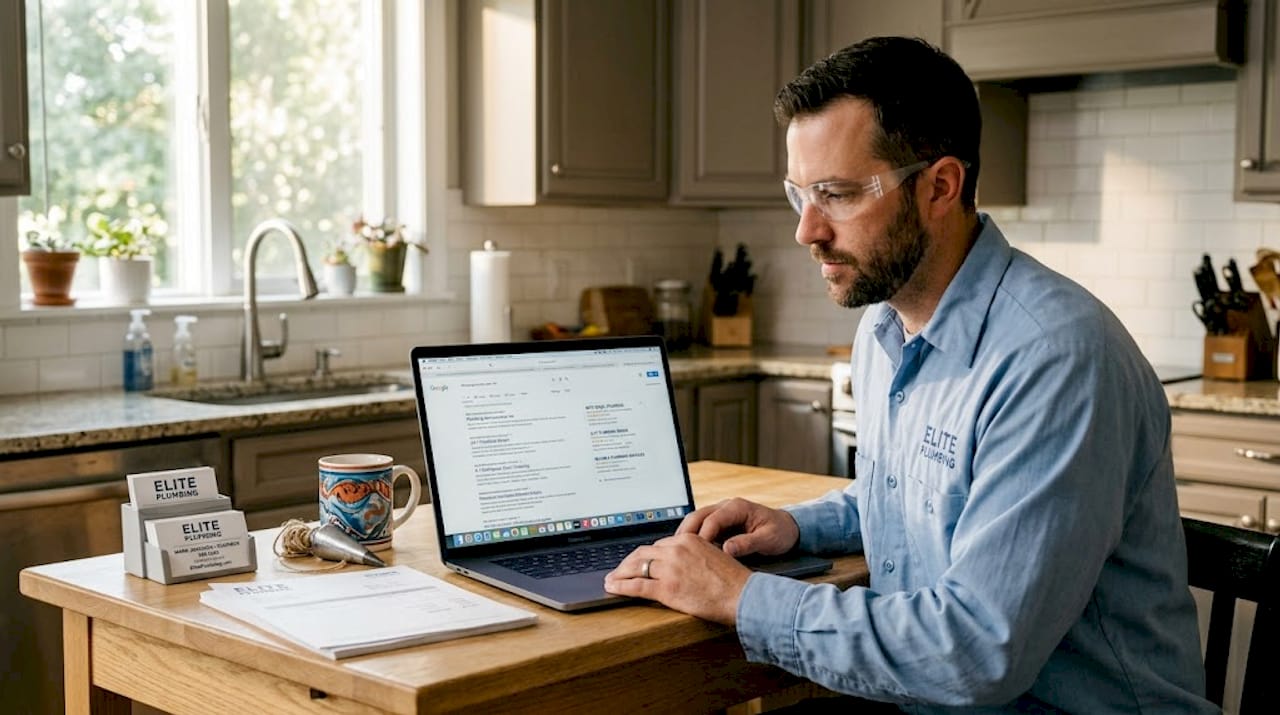
Google Search ads work on a keyword auction system. You bid on terms your potential customers are searching, and your ad appears above or alongside organic results. For local businesses, this means you can target searches in your city, zip code, or a defined radius around your location. The relevance between the search query, your ad copy, and your landing page determines your Quality Score, which directly affects both your ad placement and your cost per click.
Here are the best practices for running effective Google Search ads as a local business:
- Build tightly themed ad groups. Group keywords by topic so your ad copy directly reflects what the searcher typed. This improves relevance and Quality Score.
- Write headlines that include your location and service. "Affordable Roof Repair in Denver" outperforms generic headlines every time.
- Use call extensions and location extensions. These add your phone number and address directly to the ad, reducing friction for local customers.
- Set geographic targeting precisely. Don't pay for clicks from cities you don't serve. Use radius targeting or specific city/zip targeting.
- Review search term reports weekly. Add negative keywords to block irrelevant searches and protect your budget.
Performance Max is a multi-placement Google Ads format that runs across Search, Display, YouTube, Gmail, Discover, and Maps from a single campaign. It uses Google's machine learning to allocate your budget across these channels in real time. For local businesses with limited time to manage multiple campaigns, Performance Max offers a streamlined way to achieve broad reach without building five separate campaigns.
Performance Max is especially powerful for local businesses that want to appear on Google Maps, capture "near me" searches, and remarket to website visitors, all from a single campaign setup. The trade-off is less granular control compared to standalone Search campaigns.
The ideal use cases for search-driven ads include urgent service needs like plumbing, electrical, or medical appointments, seasonal demand peaks, and any business where customers actively search before buying. When you align your essential marketing strategies around capturing existing demand, search ads consistently deliver the strongest return for local SMBs.
Standout Meta ad examples: Call ads, instant forms, and hyperlocal targeting
If phone calls or direct leads are your top priority, Meta's specialized formats may offer the strongest fit for your business.
Meta (Facebook and Instagram) offers several distinct ad formats for local lead generation, and choosing between them depends on how your business closes sales. For local lead generation on Meta, call ads work best when your business closes via phone, while instant forms or website lead forms fit longer or more complex sales processes where gathering information first is necessary.
Here is how each Meta format works in practice:
- Call ads: The ad's primary button dials your phone number directly. Ideal for service businesses like salons, contractors, and medical offices where a conversation closes the sale. No landing page required.
- Instant experience lead forms: The form opens natively inside Facebook or Instagram without sending the user to an external website. Friction is low, which typically increases form submission rates. Works well for consultation requests, quote inquiries, and appointment scheduling.
- Website lead forms: Directs users to a landing page on your site. More complex to set up but gives you full control over the conversion experience and integrates with your CRM.
Hyperlocal geo-targeting is one of Meta's most powerful tools for local businesses. A practical Meta approach involves setting a small radius around your business location combined with precise audience and demographic tailoring. This combination boosted conversion rates by 35% in documented boutique campaigns by ensuring ads reached only the most geographically relevant and demographically matched prospects.
For a nail salon in a suburban area, this might mean targeting women aged 25 to 55 within a 5-mile radius who have shown interest in beauty services. The combination of location and interest filters narrows your audience to people who are both nearby and genuinely relevant. This directly improves your cost per lead and reduces wasted impressions on people who will never visit your location.
Building a strong social media growth strategy alongside your paid Meta ads amplifies results. Organic content builds trust while paid formats accelerate lead generation.
Pro Tip: Always have a live person ready to answer calls during your campaign's run hours. Call ads that go to voicemail convert at a dramatically lower rate. If your team is unavailable during certain hours, schedule your call ads to run only when someone can pick up.
Awareness and creative engagement: Display, video, and directory listings
Beyond capturing immediate leads, let's look at the formats best suited for building recognition and long-term customer loyalty.
serve awareness and creative-driven engagement goals. Google's Display Network reaches over 90% of global internet users across millions of websites and apps. For local businesses, display ads are particularly effective for retargeting: showing your brand again to someone who visited your website but didn't convert. This keeps your business top of mind during a customer's decision-making process.Video ads on YouTube follow a similar principle with higher creative impact. A 15 or 30-second video showcasing your salon, restaurant, or retail space builds emotional connection in a way static text ads cannot. For newer businesses or those in visually driven industries, video can accelerate brand recognition significantly.
Online listings such as Yelp, Bing Places, and Foursquare act as digital signposts that improve visibility for local searches and complement paid advertising. These listings appear in map results, local search packs, and third-party review platforms. Keeping them accurate, complete, and regularly updated costs little but contributes meaningfully to local search authority.
Here are the situations where display, video, and directory listings deliver the strongest results:
- Retargeting website visitors who looked at your services page but didn't call or submit a form
- Launching a new location or service and needing fast local awareness
- Seasonal promotions where visual storytelling outperforms text-only formats
- Reputation building in competitive local markets where customers compare multiple businesses
- Supplementing paid search to stay visible across the full customer journey
Benchmark reference table: Typical SMB ranges by ad format
| Ad format | Typical CTR range | Typical CPC range | Notes |
|---|---|---|---|
| Google Search | 3% to 8% | $1 to $6 | Varies heavily by industry and competition |
| Google Display | 0.1% to 0.5% | $0.50 to $2 | Lower CTR but broad reach; strong for retargeting |
| Shopping | 0.5% to 2% | $0.50 to $1.50 | Best for product-based local retailers |
| Meta Feed | 0.9% to 2.5% | $0.40 to $1.50 | Strong for local awareness and lead gen |
| Meta Stories/Reels | 0.5% to 1.5% | $0.30 to $1.20 | Lower cost; mobile-first creative needed |
Source: MetricNexus SMB benchmark data. Ranges are not guaranteed outcomes and vary by region, industry, and campaign quality.
Review the digital PR guide for strategies that amplify the visibility earned through both listings and paid placements.
Comparison table: Which digital ad examples fit which goals?
To bring these examples together, use this table to match the right format to your business's needs and avoid misaligned spending.
| Ad format | Primary goal | Relative cost | Complexity | Best SMB fit |
|---|---|---|---|---|
| Google Search | Direct leads, phone calls | Medium to high | Medium | Service businesses, urgent needs |
| Performance Max | Multi-channel reach, local maps | Medium to high | Low to medium | Time-limited owners wanting automation |
| Meta Call Ads | Phone call leads | Low to medium | Low | Phone-closed services, salons, contractors |
| Meta Instant Forms | Consultation/quote leads | Low to medium | Low | Multi-step sales, professional services |
| Google Display | Brand awareness, retargeting | Low | Medium | Businesses with website traffic already |
| YouTube Video | Awareness, visual engagement | Low to medium | High | New businesses, visually driven industries |
| Directory Listings | Local search visibility | Low to free | Low | All local businesses as a baseline |
You can streamline your digital marketing workflow significantly by deciding upfront which one or two formats align with your immediate goals before building more complex multi-channel campaigns.
Our take: Local SMBs should start narrow, then layer on complexity
Now that you can compare your major options, here is our perspective on how local SMBs should approach digital ad choices to maximize ROI without burning through budget on trial and error.
The temptation to run every format simultaneously is understandable. Social media platforms, ad vendors, and marketing consultants constantly pitch the next new thing. AI-powered campaigns, short-form video, augmented reality ads. The list grows every quarter. But understanding digital growth means recognizing that results compound when you focus, not when you diversify prematurely.
Most local businesses that struggle with digital advertising share one common trait: they spread thin budgets across too many channels before any single channel has enough data to optimize. A $1,500 monthly budget split across Google Search, Meta, display, and YouTube produces four weak campaigns. That same budget focused on Google Search or Meta call ads produces one campaign with enough data, volume, and iteration speed to actually improve.
The smartest approach is sequential. Start with the format that most directly matches your highest-value customer action, whether that is a phone call, a form submission, or a walk-in. Run it for at least 60 to 90 days before adding a second channel. Document what works: which headlines generate calls, which audiences convert, which time of day drives the best cost per lead. This documentation becomes your playbook for scaling.
There is also an uncomfortable truth about trends. Video ads and AI-automated campaigns are genuinely powerful, but they reward businesses that already understand their customer and their message. If you have not confirmed what makes your customers choose you over competitors, no amount of creative video production will save a fundamentally unclear value proposition.
Start narrow. Prove one channel. Then layer on complexity from a position of strength.
Start your digital advertising journey with expert support
With a clear grasp of proven digital ad formats, you're ready to gain the most from your marketing budget. Expert support can make the difference between months of trial and error and a campaign that generates real results from week one.
At SourcesNova, we work directly with local and small-to-mid-size businesses across the USA to build digital advertising strategies that match real business goals, not agency vanity metrics. From Google Search to Meta call ads and beyond, our team handles strategy and execution so you can focus on running your business. No bloated retainers and no jargon. Explore our digital advertising solutions to see how we help SMBs get found, look professional, and convert more customers.
Frequently asked questions
Which digital ad format works best for local businesses?
Search ads and Meta call ads usually drive the fastest results for local businesses focused on ready-to-buy leads.
are among the most effective digital advertising formats for local and small-to-mid-size US businesses targeting high-intent customers.How much do small businesses typically pay per click or lead?
Typical cost-per-click and cost-per-lead benchmarks vary widely by local market and industry, but SMBs can use published ranges as a starting guide. Anonymized SMB benchmark data from MetricNexus provides percentile CTR, CPC, and conversion rate ranges across Search, Display, Shopping, and Meta ad formats.
Is it better to focus on one platform or use several at once?
Most experts recommend mastering one ad format before expanding to others to get the best ROI and avoid budget waste. Focusing on your highest-ROI channel first before expanding to multi-channel ads is the approach most aligned with strong returns for small businesses.
How does hyperlocal targeting work for digital ads?
Hyperlocal targeting sets a narrow radius, typically 1 to 5 miles, around your business location to ensure ads reach those most likely to visit or convert nearby. Meta's hyperlocal geo-targeting combined with demographic filters is one of the most cost-efficient approaches for service businesses and local retailers.
Can online business listings like Yelp work with digital ads?
Digital listings complement paid ads by boosting local visibility and helping customers find trusted information about your business. Directory listings and digital signposts such as Yelp and Bing Places improve local search rankings and support the credibility that converts paid ad traffic into actual customers.